Wellness
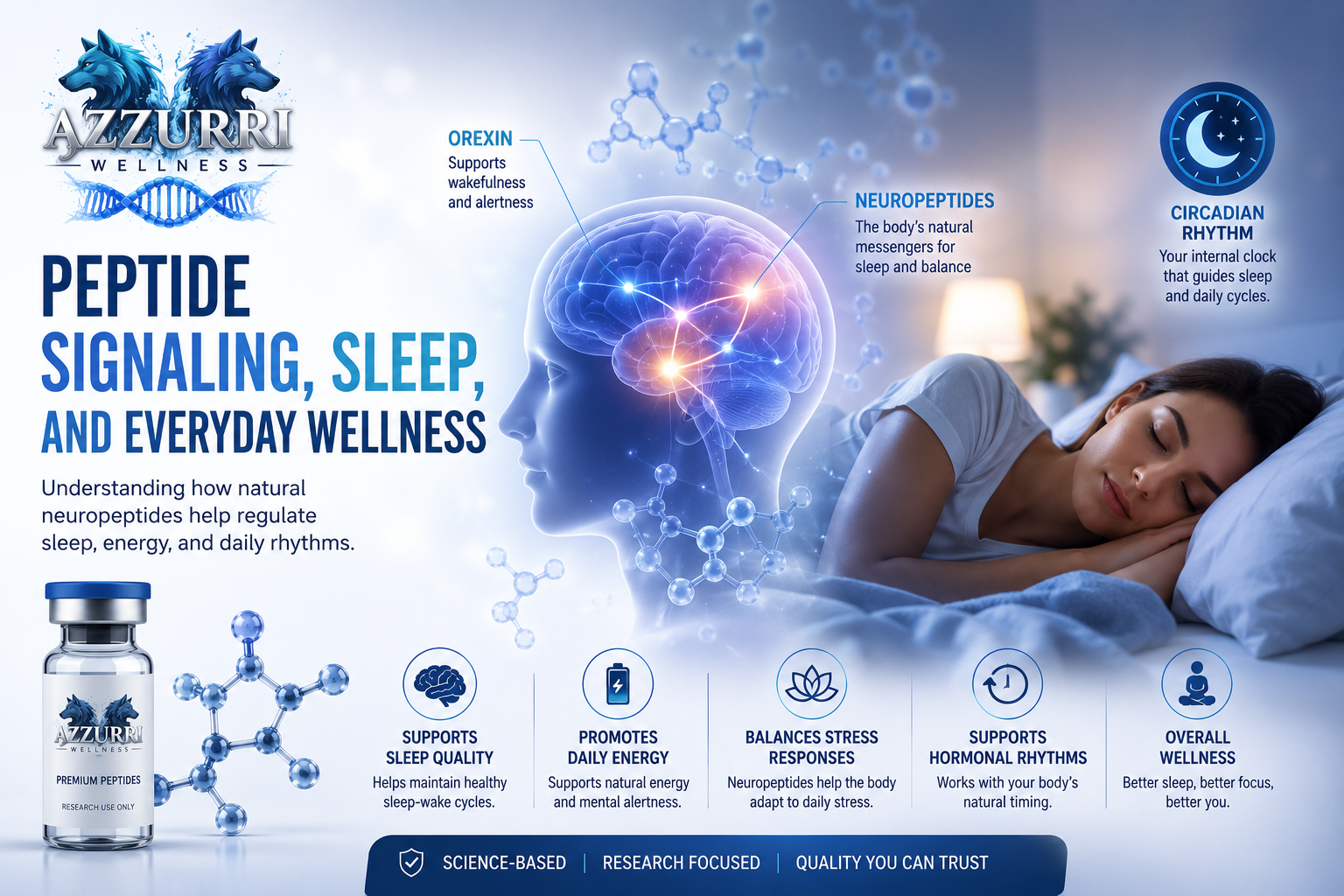
Peptide Signaling, Sleep, and Everyday Wellness
How natural neuropeptides help regulate wakefulness, rest, energy balance, and daily rhythms.
Peptide signaling and sleep are closely connected through several natural communication systems in the brain. Neuropeptides help nerve cells exchange information related to wakefulness, rest, appetite, stress responses, and energy balance.
One of the most studied examples is the orexin system. Orexin-A and orexin-B are naturally produced neuropeptides that help stabilize wakefulness and support normal transitions between sleeping and waking states.
What Are Neuropeptides?
Neuropeptides are short chains of amino acids used by the nervous system as signaling molecules.
Unlike fast electrical signals, neuropeptides can influence wider networks and help regulate longer-lasting functions.
Functions Influenced by Neuropeptides
- Sleep and wakefulness
- Appetite and energy balance
- Stress responses
- Motivation
- Mood-related pathways
- Daily biological rhythms
Different neuropeptides may support wakefulness, sleep, or transitions between the two states.
Understanding the Orexin System
Orexin is produced by a relatively small group of neurons in the hypothalamus, but those neurons connect with many areas of the brain.
Research shows that orexin signaling helps maintain stable wakefulness by activating other arousal-related systems. When orexin signaling is severely disrupted, sleep and wakefulness can become fragmented.
Other Functions Connected With Orexin
- Feeding behavior
- Energy regulation
- Motivation
- Stress responses
- Physical activity
- Reward-related signaling
This makes orexin part of a wider system connecting sleep, energy, and daily behavior.
Why Stable Sleep-Wake Patterns Matter
Healthy sleep is not simply about spending a certain number of hours in bed. The timing, continuity, and structure of sleep also matter.
Main Sleep and Wakefulness Stages
- Wakefulness
- Non-rapid eye movement sleep
- Rapid eye movement sleep
- Morning alertness
Orexin mainly supports wakefulness, while other neuropeptides, including galanin and melanin-concentrating hormone, are associated with sleep-related pathways.
Sleep and Daily Wellness
Consistent sleep supports many parts of general wellness, including attention, mood, physical energy, and daily functioning.
Peptide signaling is only one part of sleep regulation.
Other Factors That Influence Sleep
- Light exposure
- Daily schedules
- Physical activity
- Stress
- Caffeine timing
- Meal timing
- The body’s circadian clock
No single peptide controls the entire sleep process.
What Current Research Does Not Prove
Research into orexin and other neuropeptides has improved scientific understanding of sleep biology. It has also supported the development of medicines that target orexin receptors for specific diagnosed sleep conditions.
This does not mean that general peptide products automatically improve sleep, energy, or wellness. Effects depend on the exact compound, receptor target, formulation, dose, and medical context.
Practical Ways to Support Sleep Wellness
General habits that may support healthy sleep include:
- Keeping a consistent sleep schedule
- Reducing bright light close to bedtime
- Limiting late-day caffeine
- Creating a quiet and comfortable sleep environment
- Allowing time to wind down
- Seeking professional advice for ongoing sleep problems
These habits support the natural systems involved in daily sleep and wakefulness.
Final Takeaway
Natural neuropeptides play an important role in the communication systems that regulate sleep, wakefulness, energy, and daily behavior. Orexin is especially important for stable alertness and smooth sleep-wake transitions.
Research continues to expand our understanding of these pathways, but peptide biology should not be simplified into guaranteed wellness outcomes.
References
- Hung C, Yamanaka A. The role of orexin neuron activity in sleep and wakefulness regulation. 2023. View reference
- Shen YC, et al. Roles of neuropeptides in sleep-wake regulation. 2022. View reference
- Scammell TE, Arrigoni E, Lipton JO. Neural circuitry of wakefulness and sleep. 2017. View reference
- Kukkonen JP. Orexin receptor function, nomenclature and pharmacology. 2024. View reference
- Jászberényi M, et al. The orexin and hypocretin system and its wider physiological roles. 2024. View reference
Explore More Wellness Education
Read clear, evidence-focused articles about sleep, peptide biology, daily routines, and wellness science.
Explore Wellness