Immunity
Thymosin Alpha-1 and Immune Signaling Explained
What researchers have learned about this thymic peptide and the balance of innate and adaptive immune responses.
Thymosin alpha-1 and immune signaling have been studied for decades because this naturally occurring peptide is associated with the thymus and several parts of immune regulation.
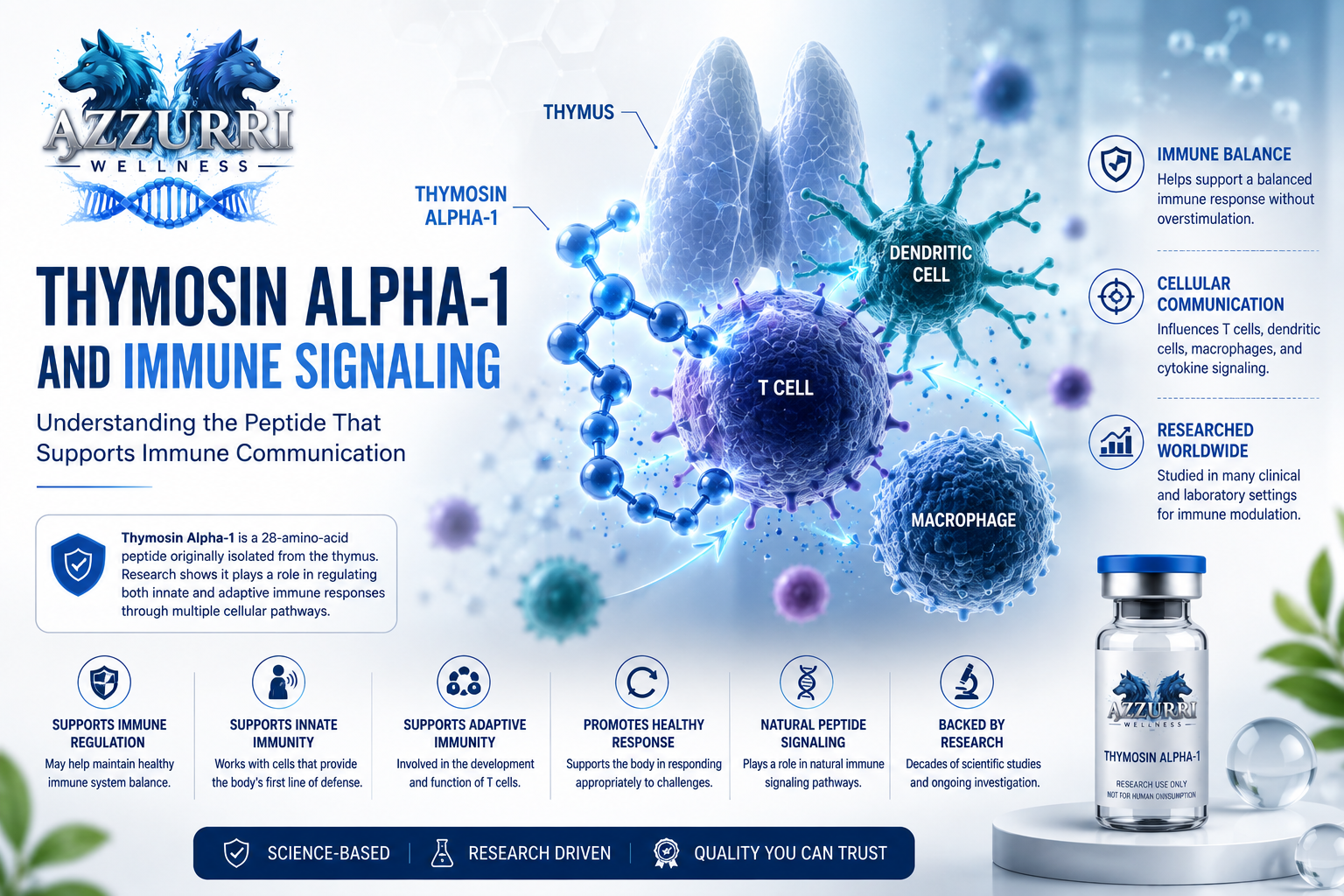
Thymosin alpha-1 is a 28-amino-acid peptide. Research has examined how it interacts with T cells, dendritic cells, macrophages, and chemical signaling pathways involved in immune responses.
What Is Thymosin Alpha-1?
The thymus is an organ involved in the development and selection of T cells. These immune cells help recognize and respond to specific biological threats.
Thymosin alpha-1 was originally isolated from thymic tissue and has since been produced synthetically for scientific and clinical investigation.
Researchers describe it as an immune-modulating peptide rather than a simple immune booster.
Immune Modulation Is About Balance
The immune system must perform two different tasks.
- Respond strongly enough when a threat is present
- Reduce or control activity when an excessive response could affect healthy tissue
For that reason, immune research focuses on regulation and balance rather than simply making the immune system stronger.
Studies suggest that thymosin alpha-1 may influence both innate and adaptive immune pathways. The exact effect can vary depending on the biological setting.
Innate and Adaptive Immunity
The immune system is commonly divided into two connected parts.
Innate Immunity
Innate immunity provides a rapid, general response.
- Macrophages
- Dendritic cells
- Natural killer cells
- Inflammatory signaling
- Physical and chemical barriers
Adaptive Immunity
Adaptive immunity develops a more targeted response.
- T cells
- B cells
- Antibodies
- Immune memory
Research has explored how thymosin alpha-1 may affect communication between these two systems.
T Cells and Dendritic Cells
Dendritic cells help detect biological signals and present information to T cells. This makes them an important link between innate and adaptive immunity.
Laboratory research indicates that thymosin alpha-1 may influence dendritic-cell activity, T-cell development, and certain cytokine pathways.
What Are Cytokines?
Cytokines are communication molecules that help immune cells coordinate their responses.
These findings describe biological mechanisms. They do not guarantee a specific outcome for an individual.
Research in Different Clinical Settings
Thymosin alpha-1 has been investigated in several immune-related clinical settings. However, the strength of evidence differs between conditions, study designs, and patient populations.
Some reviews report potentially useful immune-modulating effects while also noting that larger and better-controlled studies are required in several areas.
A 2024 prospective study involving a specific group of people living with HIV reported changes associated with immune aging and exhaustion. However, it was a single-arm study and did not establish broad conclusions for general wellness use.
Why Immune Support Claims Need Care
Immune function is complex. A product should not be described as preventing infection, treating illness, or improving immunity without strong evidence for that exact product and intended use.
Important Research Distinctions
- Laboratory findings versus human outcomes
- Association versus causation
- Immune modulation versus immune enhancement
- A specific clinical population versus the general public
- Short-term measurements versus long-term outcomes
These distinctions help keep immune-related content accurate and responsible.
Everyday Factors That Support Normal Immune Function
General wellness habits associated with normal immune health include:
- Adequate sleep
- Balanced nutrition
- Regular physical activity
- Appropriate hydration
- Stress management
- Recommended preventive healthcare
- Avoiding tobacco exposure
These habits do not guarantee protection from illness, but they support overall health.
Final Takeaway
Thymosin alpha-1 is a well-studied thymic peptide linked with several immune-signaling pathways. Research has examined its interactions with T cells, dendritic cells, macrophages, and cytokine systems.
The findings are scientifically interesting, but they should be discussed as immune-modulation research rather than guaranteed immune enhancement.
References
- Dominari A, et al. Thymosin alpha-1: A comprehensive review of the literature. 2020. View reference
- Li J, et al. Thymosin alpha-1: Biological activities, applications and mechanisms. 2010. View reference
- Garaci E, et al. Phenotypic drug discovery: A case for thymosin alpha-1. 2024. View reference
- Chen C, et al. Role of thymosin alpha-1 in restoring immune response in immunological nonresponders. 2024. View reference
- Liu F, et al. Thymosin alpha-1 as an immunomodulatory treatment: Systematic review and meta-analysis. 2016. View reference
Explore More Immunity Education
Read evidence-focused articles about immune signaling, peptide biology, and everyday wellness.
Explore Immunity