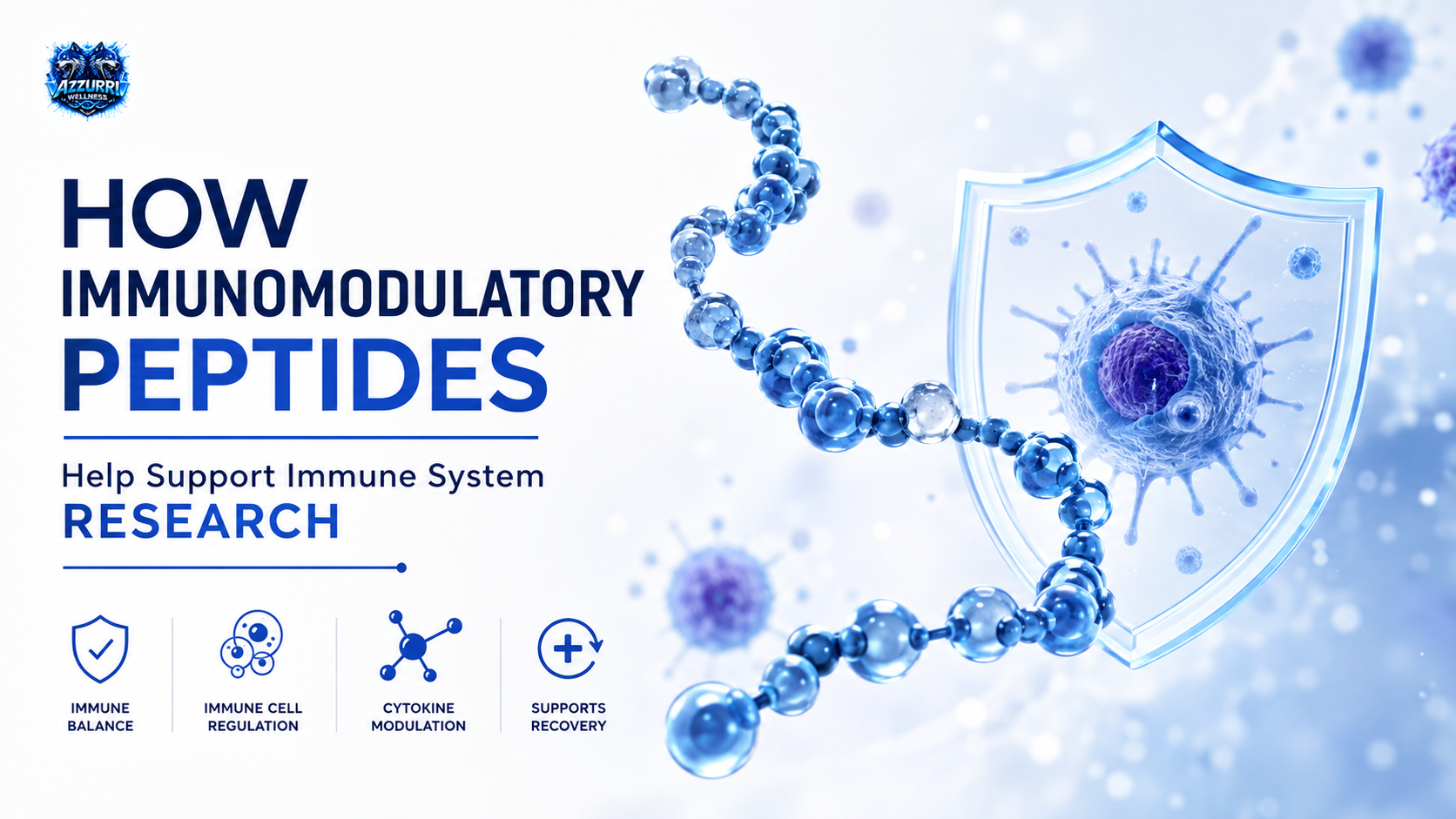
How Immunomodulatory Peptides Help Support Immune System Research
The immune system is a highly sophisticated network that protects the body against harmful microorganisms while maintaining a balance that prevents excessive inflammation. Researchers have become increasingly interested in immunomodulatory peptides because of their ability to influence immune responses without broadly suppressing or overstimulating the immune system.
These naturally occurring or synthetically designed peptides are now being studied for their potential roles in immunology, inflammation research, and host defense mechanisms.
What Are Immunomodulatory Peptides?
Immunomodulatory peptides are short chains of amino acids that interact with immune cells and signaling pathways. Rather than directly attacking pathogens, these peptides help regulate how immune cells communicate and respond to external threats.
Many of these peptides occur naturally in humans, animals, and plants, while others are developed synthetically to better understand immune system function.
How Do They Influence the Immune System?
Research suggests that immunomodulatory peptides may influence several important immune functions, including:
- Supporting communication between immune cells.
- Regulating inflammatory responses.
- Influencing cytokine production.
- Helping maintain immune balance.
- Supporting tissue repair during the healing process.
Scientists continue to investigate these mechanisms to better understand how peptide signaling contributes to overall immune regulation.
Why Are Researchers Interested?
Unlike many conventional compounds that affect multiple biological systems, peptides can often be designed to target specific cellular pathways.
Current research is exploring their potential applications in:
- Inflammation research
- Autoimmune disease studies
- Vaccine development
- Infection-related research
- Tissue regeneration studies
Because peptides are naturally broken down into amino acids, they also present unique opportunities for studying biological processes with high specificity.
Current Challenges
Despite promising findings, peptide research continues to face several challenges.
Researchers are working to improve:
- Peptide stability
- Bioavailability
- Delivery methods
- Manufacturing consistency
- Long-term biological activity
Innovations such as peptide engineering, chemical modification, and advanced formulation technologies are helping overcome these limitations.
The Future of Peptide-Based Immune Research
The field of peptide science continues to expand rapidly. Advances in artificial intelligence, computational biology, and molecular engineering allow scientists to design peptides with greater precision than ever before.
Future studies may provide deeper insight into how immunomodulatory peptides influence immune signaling and contribute to biomedical research. As scientific understanding grows, these molecules are expected to remain an important focus of immunology and therapeutic development.
Conclusion
Immunomodulatory peptides represent an exciting area of scientific research due to their ability to influence immune system communication and regulation. While research is ongoing, these molecules continue to provide valuable insights into immune biology and may contribute to future innovations in health and biomedical science.
At Azzurri Wellness, we are committed to supporting scientific education by sharing research-focused information about peptides and their expanding role in modern research.
Frequently Asked Questions
Are immunomodulatory peptides medicines?
Not necessarily. Many peptides are currently being studied in laboratory and clinical research to better understand their biological effects.
How do immunomodulatory peptides work?
They interact with immune cells and signaling molecules to influence immune responses rather than directly eliminating pathogens.
Why are peptides important in immune research?
Their specificity and biological activity make them valuable tools for studying inflammation, immune regulation, and cellular communication.