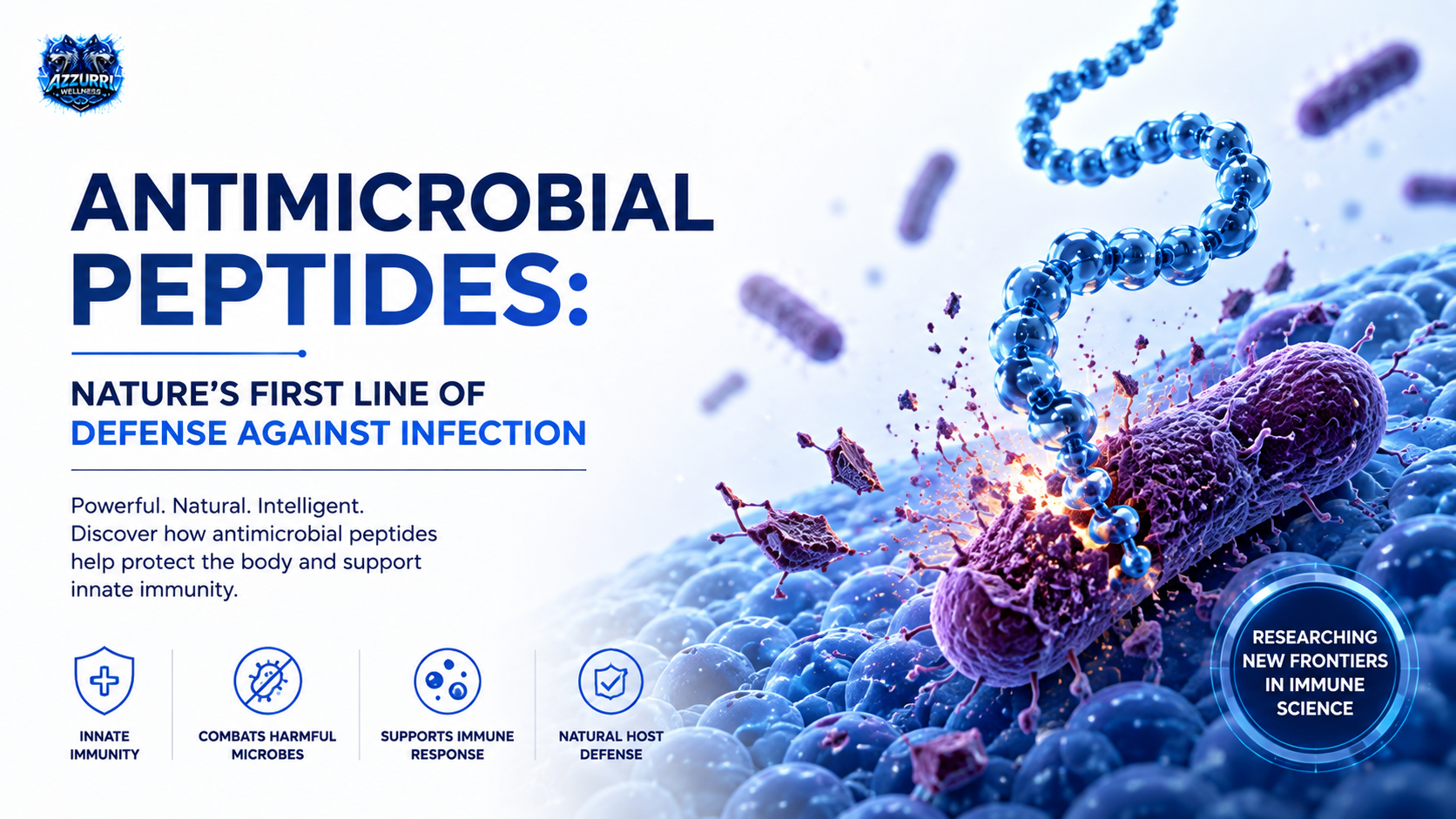
Antimicrobial Peptides: Nature's First Line of Defense Against Infection
The human body relies on an intricate immune system to defend against bacteria, viruses, fungi, and other harmful microorganisms. Among its earliest protective mechanisms are antimicrobial peptides (AMPs), naturally occurring molecules that play a vital role in innate immunity.
These peptides have attracted significant scientific interest because of their ability to help protect the body while also influencing immune responses.
As concerns over antimicrobial resistance continue to grow, researchers are exploring antimicrobial peptides as promising tools for future biomedical research.
What Are Antimicrobial Peptides?
Antimicrobial peptides are short chains of amino acids produced by humans, animals, plants, and even microorganisms. They are naturally found in tissues such as the skin, lungs, digestive tract, and immune cells, where they serve as an important part of the body's first line of defense.
Unlike antibodies, which require time to develop after exposure to pathogens, antimicrobial peptides act almost immediately when harmful microbes are detected.
How Do They Work?
Research suggests that antimicrobial peptides protect the body through several mechanisms:
- Disrupting microbial cell membranes.
- Preventing the growth and spread of harmful microorganisms.
- Helping recruit immune cells to sites of infection.
- Supporting communication between immune cells.
- Assisting in tissue repair following immune responses.
Because they use multiple mechanisms of action, scientists believe antimicrobial peptides may reduce the likelihood of microbes developing resistance compared with some conventional antimicrobial agents.
Why Are They Important in Research?
Antimicrobial resistance has become one of the world's most pressing public health challenges. Researchers are studying antimicrobial peptides because of their unique biological properties and their ability to target a wide range of microorganisms.
Current areas of research include:
- Novel antimicrobial therapies
- Wound healing studies
- Medical device coatings
- Inflammation research
- Respiratory and gastrointestinal health
- Drug delivery systems
Challenges in Peptide Development
Although antimicrobial peptides show great promise, researchers continue to address several challenges before broader applications become possible.
- Improving peptide stability.
- Increasing resistance to enzymatic degradation.
- Enhancing targeted delivery.
- Reducing manufacturing costs.
- Optimizing peptide design for greater effectiveness.
Advances in peptide engineering and computational biology are helping scientists overcome many of these obstacles.
The Future of Antimicrobial Peptide Research
With rapid developments in biotechnology, artificial intelligence, and protein engineering, antimicrobial peptide research is expanding faster than ever. Scientists are designing next-generation synthetic peptides with improved stability, selectivity, and biological activity.
As research continues, antimicrobial peptides are expected to play an increasingly important role in understanding immune function and developing innovative biomedical solutions.
Conclusion
Antimicrobial peptides are essential components of the innate immune system and remain one of the most exciting areas of peptide research. Their ability to interact with microbes while supporting immune regulation has made them valuable subjects of ongoing scientific investigation.
At Azzurri Wellness, we are committed to providing educational, research-focused content that highlights the latest developments in peptide science and their expanding role in modern biomedical research.
Frequently Asked Questions
What are antimicrobial peptides?
They are naturally occurring short proteins that help protect the body against bacteria, viruses, fungi, and other microorganisms as part of the innate immune system.
Are antimicrobial peptides antibiotics?
No. While both can combat microorganisms, antimicrobial peptides are naturally produced by living organisms and often work through different biological mechanisms.
Why are antimicrobial peptides important?
They help researchers better understand innate immunity, host defense mechanisms, inflammation, and potential future therapeutic approaches.