Fat Loss
Peptide YY, Appetite, and Healthy Fat Loss
How a natural gut peptide helps the body communicate fullness after meals.
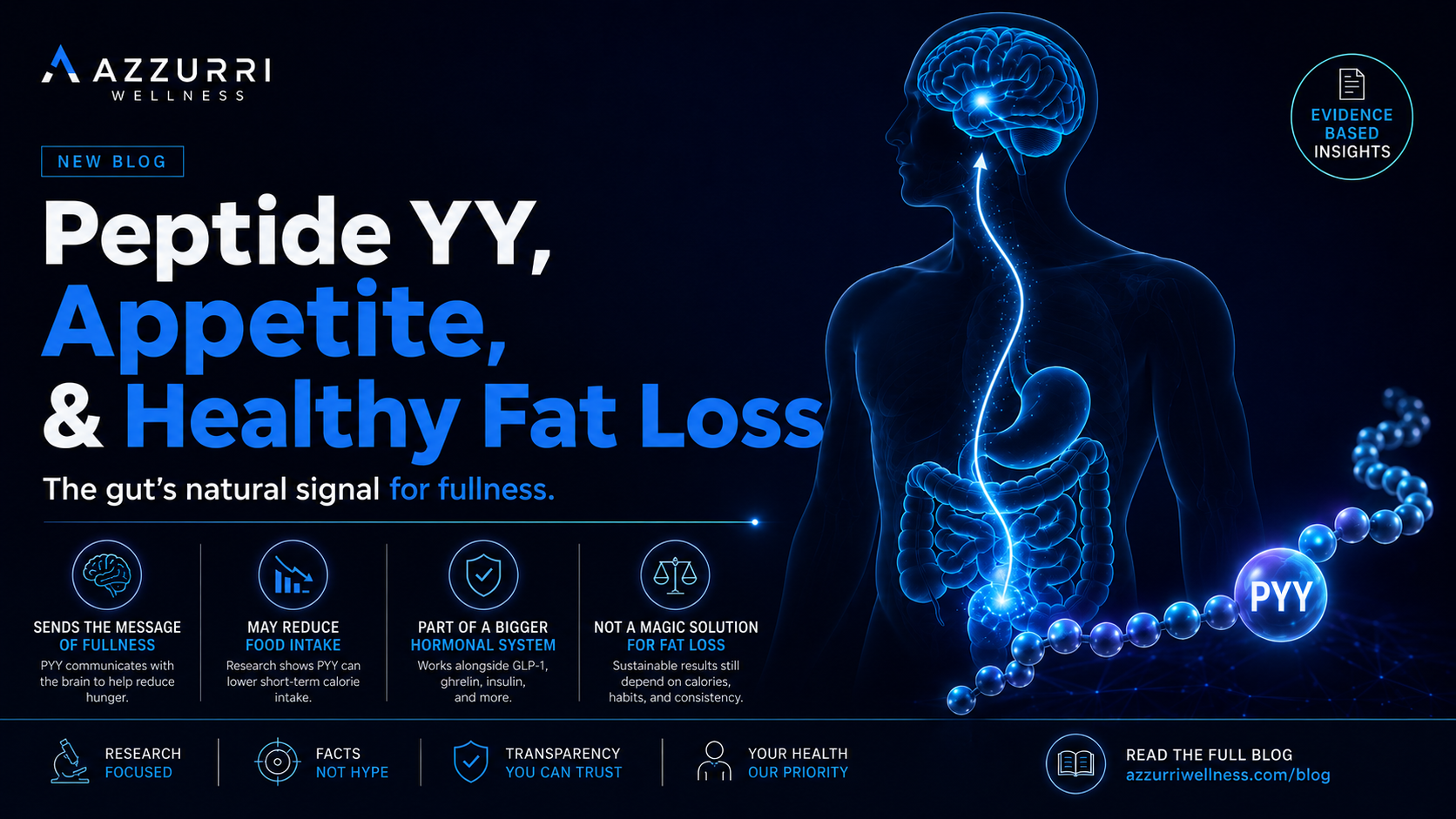
Peptide YY and fat loss are connected through the body’s natural appetite-regulation system. Peptide YY, commonly shortened to PYY, is a gut hormone released after eating. It sends signals involved in fullness, appetite control, and short-term food intake.
PYY does not directly remove stored body fat. Instead, researchers study how it may influence eating behavior and energy intake. Fat loss occurs when the body uses more energy than it receives over time, while appetite-related peptides may affect how manageable that process feels.
What Is Peptide YY?
PYY is produced mainly by specialized cells in the lower digestive tract. Its levels generally rise after food enters the digestive system.
The body produces different forms of PYY, including PYY3-36. This form can interact with receptors involved in appetite signaling.
Areas Studied in PYY Research
- Fullness after eating
- Hunger between meals
- Meal size
- Communication between the gut and brain
- Long-term energy balance
PYY is only one part of a much larger system that also involves GLP-1, ghrelin, insulin, leptin, and signals from the nervous system.
How PYY Communicates With the Brain
After a meal, PYY enters circulation and interacts with appetite pathways, including receptors connected to the hypothalamus.
The hypothalamus helps integrate information about food availability, stored energy, hormones, and nutritional status. PYY3-36 is believed to influence this system partly through the Y2 receptor.
An early human study reported that PYY3-36 infusion reduced food intake during the observation period. However, controlled infusion experiments do not automatically show how a commercial product, supplement, or different formulation would behave.
What Human Studies Have Found
Researchers have tested whether people with obesity remain responsive to PYY’s appetite-related effects.
A controlled study reported that PYY3-36 reduced food intake in both lean participants and participants with obesity. The results suggested that obesity did not produce the same clear resistance to PYY that has sometimes been observed with other appetite hormones.
Another human study found that a meaningful reduction in spontaneous food intake occurred mainly at pharmacological blood concentrations. The investigators concluded that PYY’s normal physiological role in human satiety still required further clarification.
These findings show why one study should not be used to make broad fat-loss promises.
PYY After Weight-Loss Procedures
Studies have also measured PYY following different weight-management interventions.
One prospective study found that certain bariatric procedures increased PYY responses and reduced appetite, while comparable medically managed weight loss did not produce the same hormonal changes.
The authors suggested that stronger post-meal PYY signaling may contribute to increased satiety following these procedures.
This does not mean PYY alone explains the results. Changes in anatomy, food intake, digestion, other hormones, and behavior also contribute.
Appetite Control Is Not the Same as Fat Burning
A lower appetite may support reduced calorie intake, but appetite suppression and direct fat metabolism are different processes.
Factors That Influence Fat Loss
- Total energy intake
- Physical activity
- Resting energy needs
- Sleep and stress
- Food quality and portion size
- Medical and hormonal factors
- Consistency over time
PYY may participate in appetite communication, but it should not be described as independently melting, targeting, or eliminating body fat.
Why Individual Responses Differ
People can experience hunger and fullness differently because of differences in sleep, meal composition, physical activity, medications, health status, and previous weight loss.
Protein, fiber, meal volume, and eating speed may also affect satiety. Hormone levels are only one part of the overall experience.
A laboratory result or average study response cannot guarantee the same outcome for every person.
What Future Studies Need to Clarify
- Long-term effects rather than single meals
- Whether appetite changes remain consistent
- Differences between delivery methods
- Side-effect patterns and tolerability
- Effects on lean mass and fat mass
- How PYY interacts with other gut hormones
- Which groups may respond differently
Short-term reductions in food intake should not automatically be treated as proof of lasting fat loss.
Final Takeaway
Peptide YY is a natural gut hormone involved in communication between the digestive system and appetite-control pathways in the brain. Human studies suggest that PYY3-36 can reduce appetite and food intake under certain controlled conditions, but findings vary by concentration, study design, and participant group.
PYY research helps explain how fullness is regulated, but it does not support guaranteed or stand-alone fat-loss claims. Sustainable body-fat reduction still depends on overall energy balance, daily habits, individual health, and long-term consistency.
References
- Batterham RL, et al. The gut hormone peptide YY regulates appetite. Nature. View reference
- Batterham RL, et al. Inhibition of food intake in obese subjects by peptide YY3-36. New England Journal of Medicine. 2003. View reference
- Degen L, et al. Effect of peptide YY3-36 on food intake in humans. Gastroenterology. 2005. View reference
- Valderas JP, et al. A prospective study of peptide YY and appetite after weight-loss procedures. 2010. View reference
- Zac-Varghese S, et al. Translational studies on PYY as a novel target in obesity. 2011. View reference
Explore More Fat-Loss Science
Read clear, evidence-focused articles about appetite signaling, energy balance, metabolism, and body composition.
Explore Articles