Fat Loss
GLP-1, Satiety, and Changes in Body Fat
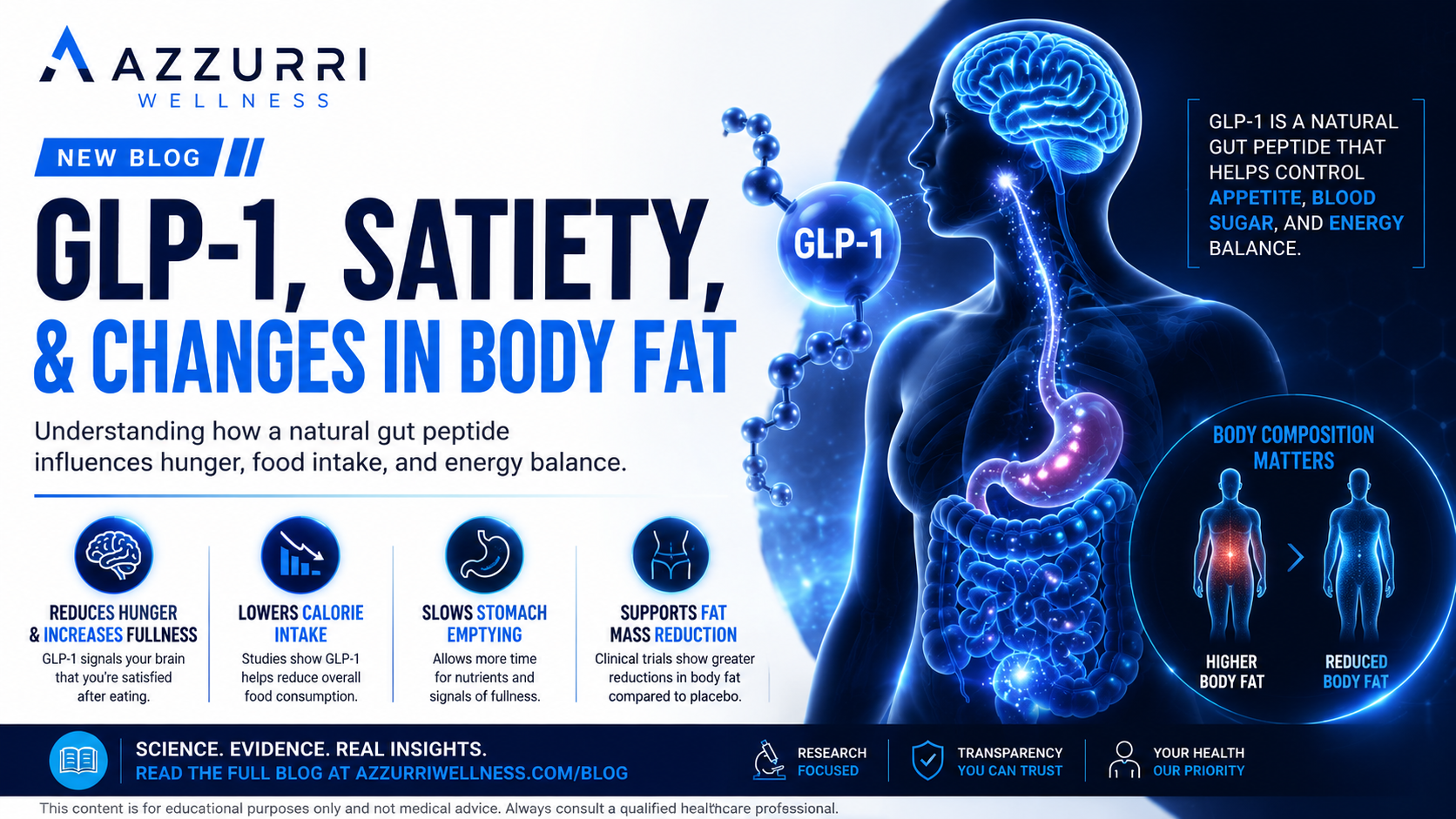
Understanding how a natural gut peptide influences hunger, food intake, and energy balance.
GLP-1 and body-fat change are widely discussed because GLP-1 participates in appetite, digestion, blood-glucose signaling, and energy intake. GLP-1 stands for glucagon-like peptide-1 and is naturally released by the digestive system after food is eaten.
Research suggests that activating GLP-1 pathways can increase fullness and reduce food intake. However, GLP-1 does not make energy balance irrelevant, and different compounds that affect the same pathway cannot be assumed to have identical results.
What Is GLP-1?
GLP-1 is a peptide hormone produced mainly by specialized intestinal cells. Its release increases after a meal, particularly when nutrients reach the digestive tract.
Natural Functions of GLP-1
- Signaling that food has been consumed
- Supporting post-meal insulin release
- Influencing glucagon signaling
- Affecting stomach emptying
- Communicating fullness to the brain
- Helping regulate short-term energy intake
Natural GLP-1 is broken down rapidly in the body. Longer-acting compounds designed to stimulate the same receptor have different durations and pharmacological properties.
How GLP-1 Affects Satiety
Satiety is the feeling of fullness that develops during and after eating. It helps determine when a meal ends and how soon hunger returns.
In an early controlled human study, GLP-1 administration increased feelings of fullness and reduced energy intake. The investigators concluded that GLP-1 may have a physiological role in appetite regulation.
Another study involving participants with obesity found that GLP-1 reduced hunger and food intake. The authors suggested that communication involving the digestive system and vagal pathways may contribute to this effect.
These studies help explain the mechanism, but they do not prove that every GLP-1-related product produces meaningful or lasting fat loss.
Appetite Reduction Versus Increased Calorie Burning
One important research question is whether GLP-1-related body-weight changes come mainly from reduced food intake or increased energy expenditure.
A controlled study of liraglutide concluded that weight reduction appeared to be driven mainly by lower appetite and energy intake rather than higher energy expenditure.
A semaglutide study also found reduced hunger, fewer food cravings, improved control of eating, and lower preference for high-fat foods. Body-weight reduction came mainly from fat mass, while adjusted resting metabolic rate was not significantly different between treatments.
This distinction matters because phrases such as “boosts metabolism” or “burns fat directly” may misrepresent the mechanism.
What Body-Composition Studies Show
Scale weight includes fat, muscle, water, glycogen, bone, and digestive contents. For that reason, researchers may use body-composition measurements rather than relying only on total weight.
A controlled study of oral semaglutide reported lower unrestricted energy intake, increased fullness, improved eating control, and reduced body-fat mass after 12 weeks.
These results relate to a specific compound, dose, participant group, and controlled study design. They should not be transferred automatically to unrelated peptide products.
GLP-1 Works Within a Larger Hormonal Network
GLP-1 does not work alone. Appetite and body weight are influenced by several overlapping signals.
Other Signals Involved in Appetite Regulation
- Peptide YY
- Ghrelin
- GIP
- Insulin
- Leptin
- Glucagon
- Neural reward pathways
- Stomach and intestinal signals
A randomized crossover study examined combined GLP-1 and GIP infusion in people with overweight or obesity. This type of work demonstrates that gut hormones may interact, but combined signaling can produce different outcomes from activating one pathway by itself.
Why Long-Term Fat Loss Is More Complex
Reduced appetite can make lower energy intake easier, but long-term body-fat change may still be affected by several factors.
- Changes in physical activity
- Loss of lean tissue
- Adaptive reductions in energy expenditure
- Sleep and stress
- Food availability and habits
- Side effects and treatment adherence
- Weight regain after an intervention stops
A short study may demonstrate appetite reduction without answering all questions about long-term maintenance.
Preserving Lean Mass Matters
The goal of weight management is not always simply to make the number on the scale lower. Maintaining muscle and physical function can also be important.
Resistance exercise, adequate dietary protein, sleep, and appropriate professional guidance may help support lean mass during calorie reduction. The correct approach depends on the individual’s health, age, activity level, and nutritional needs.
GLP-1-related content should therefore distinguish between total weight loss and changes specifically involving body fat.
What Responsible GLP-1 Content Should Avoid
- Melts away fat
- Guarantees rapid weight loss
- Works without lifestyle changes
- Has no side effects
- Produces the same result for everyone
- Permanently controls appetite
- Directly targets one body area
Evidence is strongest when claims remain connected to the exact compound and study conditions.
Final Takeaway
GLP-1 is a natural gut peptide involved in post-meal signaling, fullness, and energy intake. Human studies show that GLP-1 pathway activation can reduce hunger and food consumption, and some controlled trials have reported reductions in body weight and fat mass.
The available evidence suggests that these changes are driven mainly by lower appetite and energy intake rather than a large increase in resting calorie expenditure. Results depend on the exact compound, study design, individual response, and duration.
GLP-1 research should therefore be explained accurately rather than reduced to simple fat-burning promises.
References
- Flint A, et al. Glucagon-like peptide 1 promotes satiety and suppresses energy intake in humans. Journal of Clinical Investigation. 1998. View reference
- Näslund E, et al. Energy intake and appetite are suppressed by glucagon-like peptide-1 in obese humans. 1999. View reference
- van Can J, et al. Effects of liraglutide on gastric emptying, glycemic parameters, appetite and energy metabolism. 2014. View reference
- Blundell J, et al. Effects of once-weekly semaglutide on appetite, energy intake, food preference and body weight. 2017. View reference
- Dahl K, et al. Effects of oral semaglutide on energy intake, food preference, appetite and body weight. 2021. View reference
- Bergmann NC, et al. Effects of combined GIP and GLP-1 infusion on appetite and energy intake. 2019. View reference
Understand Fat-Loss Biology
Explore evidence-focused articles about appetite hormones, energy balance, metabolism, and body composition.
Read More