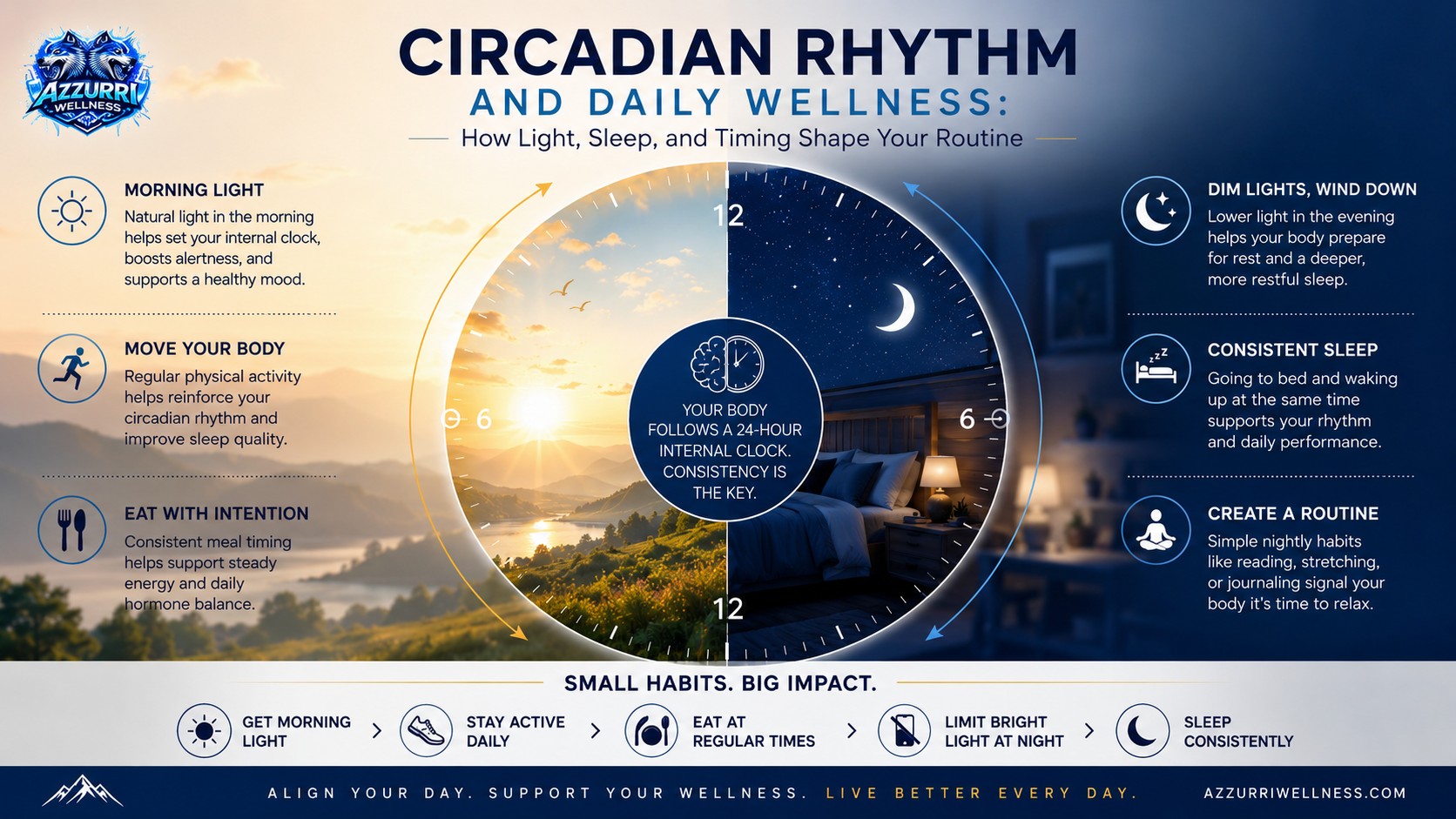
What Is The Circadian Rhythm?
The circadian rhythm is the body's internal timing system.
It helps coordinate patterns across the day and night, including:
- Sleep and wake timing
- Alertness
- Daily activity
- Rest periods
- Responses to light and darkness
The system is influenced by environmental signals, with light being particularly important.
Why Light Matters
Light exposure can influence the timing of the sleep-wake cycle.
The Effect Can Depend On
- Time of day
- Light intensity
- Duration
- Light spectrum
- Previous light exposure
Morning and evening light do not affect daily timing in exactly the same way, which is why consistency matters.
Morning Light Helps Set The Day
Exposure to natural light early in the day can help reinforce the distinction between daytime and nighttime.
Simple Morning Habits
- Open curtains after waking
- Step outside for a short walk
- Have breakfast near natural light
- Spend part of the morning outdoors when practical
The goal is to create simple and consistent environmental signals.
Evening Light Deserves Attention Too
Bright light late in the evening can influence daily timing and sleep patterns.
Screens, indoor lighting, and late-night environments all contribute to evening light exposure.
A More Consistent Evening Routine Can Include
- Lowering unnecessary bright lighting
- Keeping bedtime relatively consistent
- Creating a calmer wind-down period
- Reducing stimulating activities close to sleep
Consistent Sleep And Wake Times Matter
A routine becomes easier to maintain when sleep and wake times are reasonably predictable.
Consistency does not mean every day must be identical.
A Stable Routine Can Support
- More predictable mornings
- Easier evening wind-down
- Better daily structure
- More consistent activity patterns
Movement Can Become A Time Cue
Daily movement can also help organize a routine.
A walk, workout, or other physical activity performed at roughly similar times can become part of a predictable daily pattern.
Examples
- Morning walk
- Midday training
- Evening mobility routine
- Outdoor activity during daylight hours
The important part is choosing a schedule that is realistic enough to repeat.
Meal Timing Can Add Structure
Meal timing is another simple way to organize the day.
You do not need rigid schedules.
Regular meal patterns can help create predictable routines around:
- Breakfast
- Lunch
- Dinner
- Activity
- Sleep
The main goal is consistency rather than perfection.
Travel And Schedule Changes Can Disrupt Timing
Daily timing can be challenged by changing routines.
Common Disruptions Include
- Travel
- Shift work
- Late nights
- Weekend schedule changes
- Irregular sleep patterns
Returning to familiar light, activity, and sleep patterns can help restore structure after a schedule change.
Build Your Day Around Simple Anchors
A practical daily routine can be built around a few consistent anchors.
Morning
- Wake at a regular time
- Get natural light
- Move
- Hydrate
Daytime
- Stay active
- Spend time outdoors when possible
- Keep meals relatively regular
Evening
- Reduce unnecessary bright light
- Slow the pace
- Follow a consistent bedtime routine
These habits can help make the day feel more organized without turning wellness into a complicated checklist.
Consistency Beats Perfection
The goal is not to control every minute of the day.
Real life changes. Work schedules shift. Travel happens. Weekends look different.
A strong routine is one that can bend without completely disappearing.
Final Thoughts
Circadian rhythm and wellness are strongly influenced by timing and consistency.
Light exposure, sleep schedules, movement, meals, and evening habits can all help create clearer daily structure.
Get light in the morning. Stay active during the day. Slow things down at night. Repeat consistently.