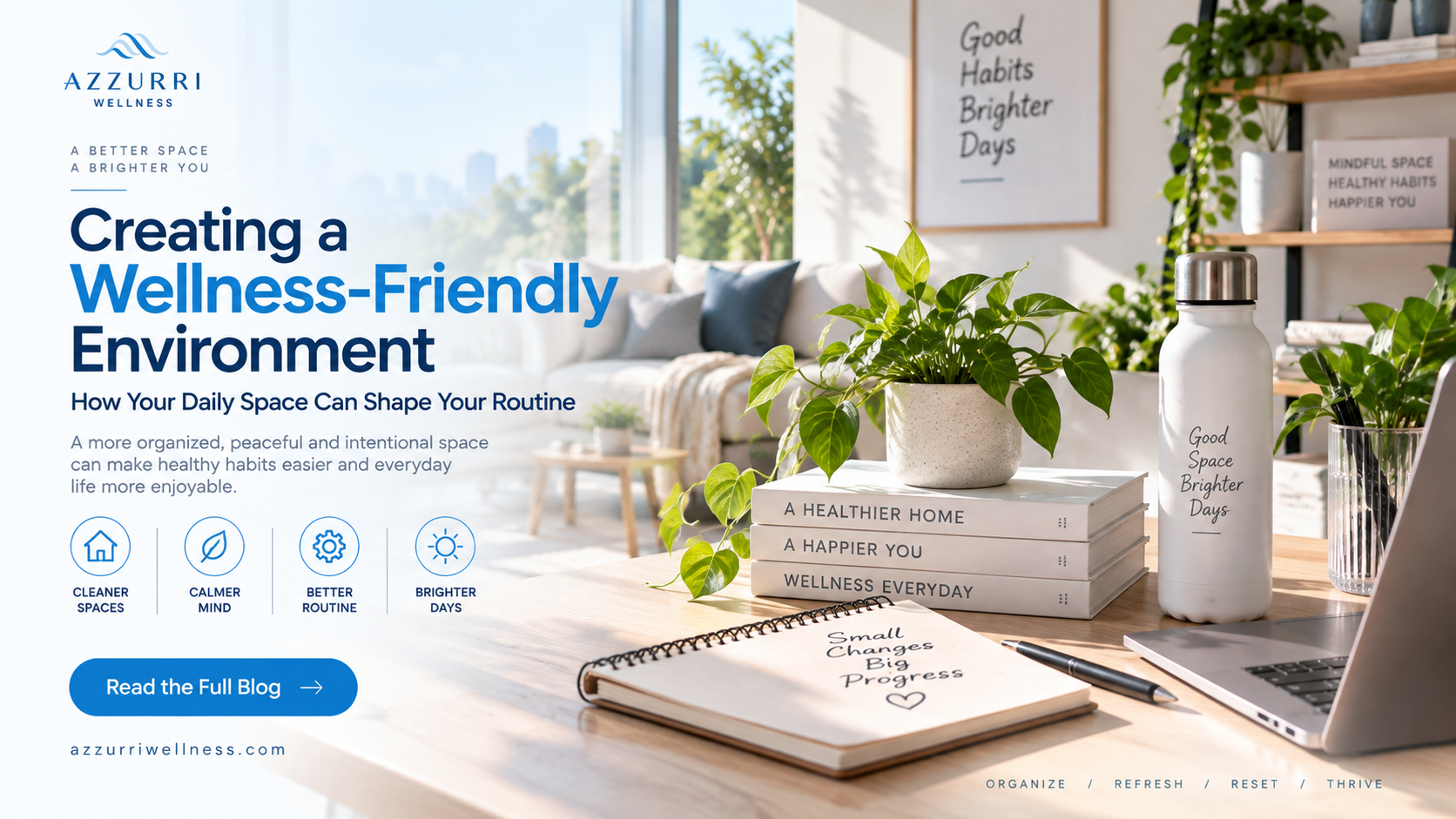
Creating a Wellness-Friendly Environment: How Your Daily Space Can Shape Your Routine
Your surroundings can influence how you approach your everyday routine. A cluttered workspace, distracting bedroom, or poorly organized kitchen can make simple habits feel more difficult, while a comfortable and organized environment can make wellness routines easier to follow. Creating a wellness-friendly environment does not require a complete redesign. Small changes to the spaces you use every day can make your routine feel more comfortable and intentional.
Start With Your Most-Used Spaces
You do not need to change your entire home.
Start with the areas you use most frequently.
- Your bedroom
- Home office
- Kitchen
- Living room
- Workout area
Look at each space and consider whether it supports the routine you want to maintain.
Keep Your Environment Organized
Organization can make everyday tasks feel simpler.
For example, keeping workout equipment in an accessible location may make it easier to include movement in your day. Organizing your kitchen can make meal preparation more convenient, while keeping your workspace tidy can create a more comfortable environment for focused tasks.
The objective is not perfection. It is functionality.
Create a Space for Movement
Movement does not always require a dedicated gym.
A small area with enough room for stretching, mobility exercises, or simple bodyweight activities can provide a convenient space for movement.
Keeping the area clear and ready to use can make it easier to incorporate movement into your daily routine.
Make Rest a Priority
Your environment can also support moments of rest.
Consider creating a comfortable area where you can step away from work and screens.
Simple changes such as softer lighting, a comfortable chair, reduced clutter, or a consistent evening setup can create a more relaxing atmosphere.
Think About Lighting
Lighting is another important element of your environment.
Natural daylight can make indoor spaces feel brighter and more inviting. During the evening, softer lighting can create a different atmosphere that separates work and daytime activities from your nighttime routine.
The right lighting depends on the space and how you use it.
Reduce Everyday Distractions
Digital devices are a major part of modern life, but constant notifications can make it difficult to disconnect.
Creating specific areas or periods where devices are put aside can help establish boundaries between work, entertainment, and personal time.
Even small changes can make your environment feel more intentional.
Personalize Your Wellness Space
A wellness-friendly environment should also feel like your own.
Plants, photographs, comfortable furniture, books, artwork, or other personal items can make a space more enjoyable.
The goal is to create surroundings that encourage you to spend time on the activities that matter to you.
Build Your Environment Around Your Routine
The most effective environment is one that supports your actual lifestyle.
If you enjoy reading, create a comfortable reading corner. If you like morning workouts, keep your equipment accessible. If you prefer preparing meals at home, organize your kitchen so frequently used items are easy to reach.
Small environmental adjustments can make routines feel more natural.
Conclusion
Wellness is not limited to what happens during a workout or what you put on your plate. The spaces around you can also influence how easily you maintain your everyday routines.
Creating a wellness-friendly environment does not require expensive changes. Start with one room, remove unnecessary distractions, organize what you use regularly, and create spaces that support the habits you want to maintain.
Your environment should make your routine easier, more comfortable, and more enjoyable.