Peptide Guides & Articles
Evidence-informed guides on peptides — dosage, benefits, side effects, and comparisons.
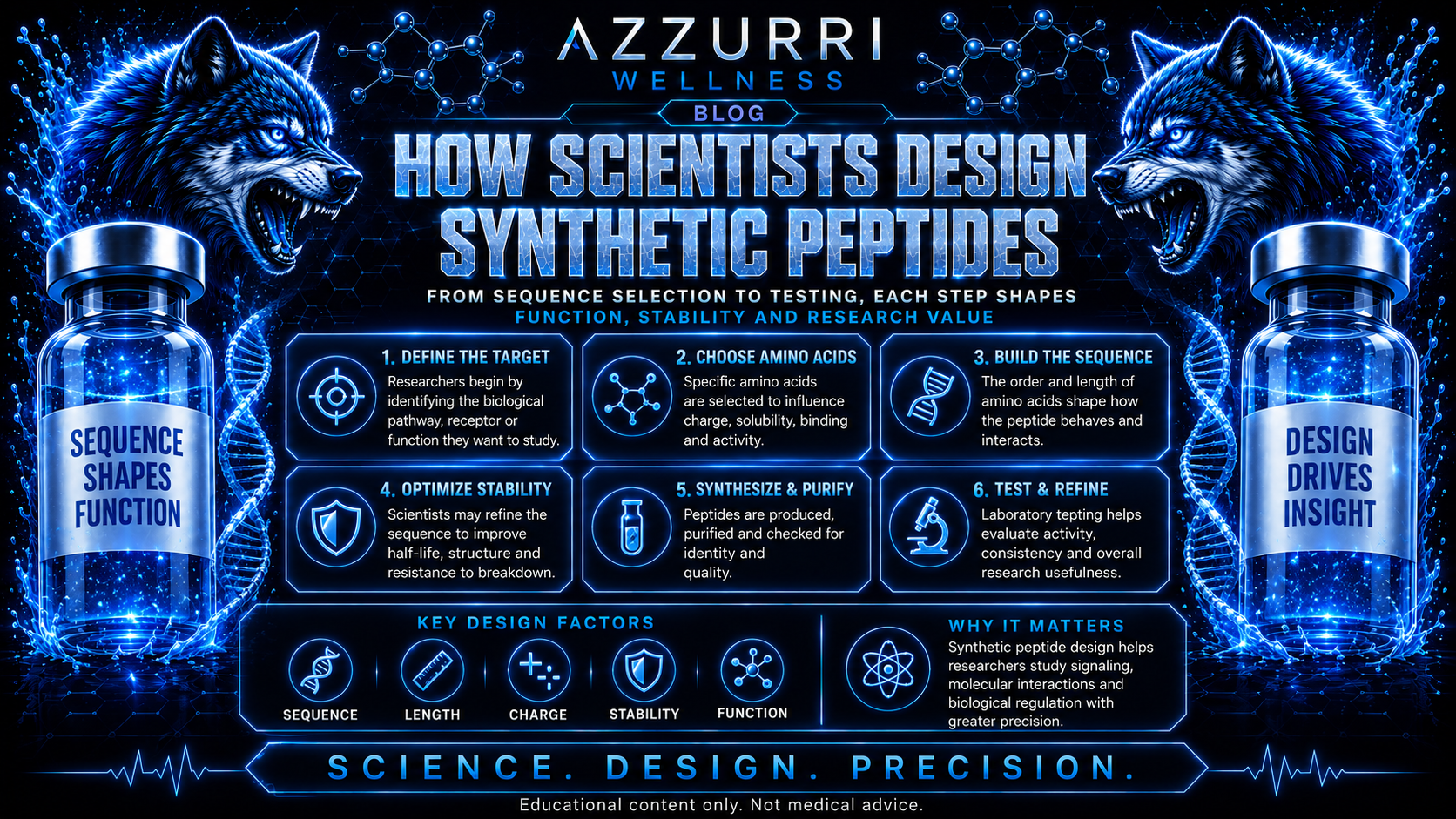
How Scientists Design Synthetic Peptides
Synthetic peptide design is part biology, part engineering — taking a natural signal and re-tuning it for stability, selectivity and longer action.
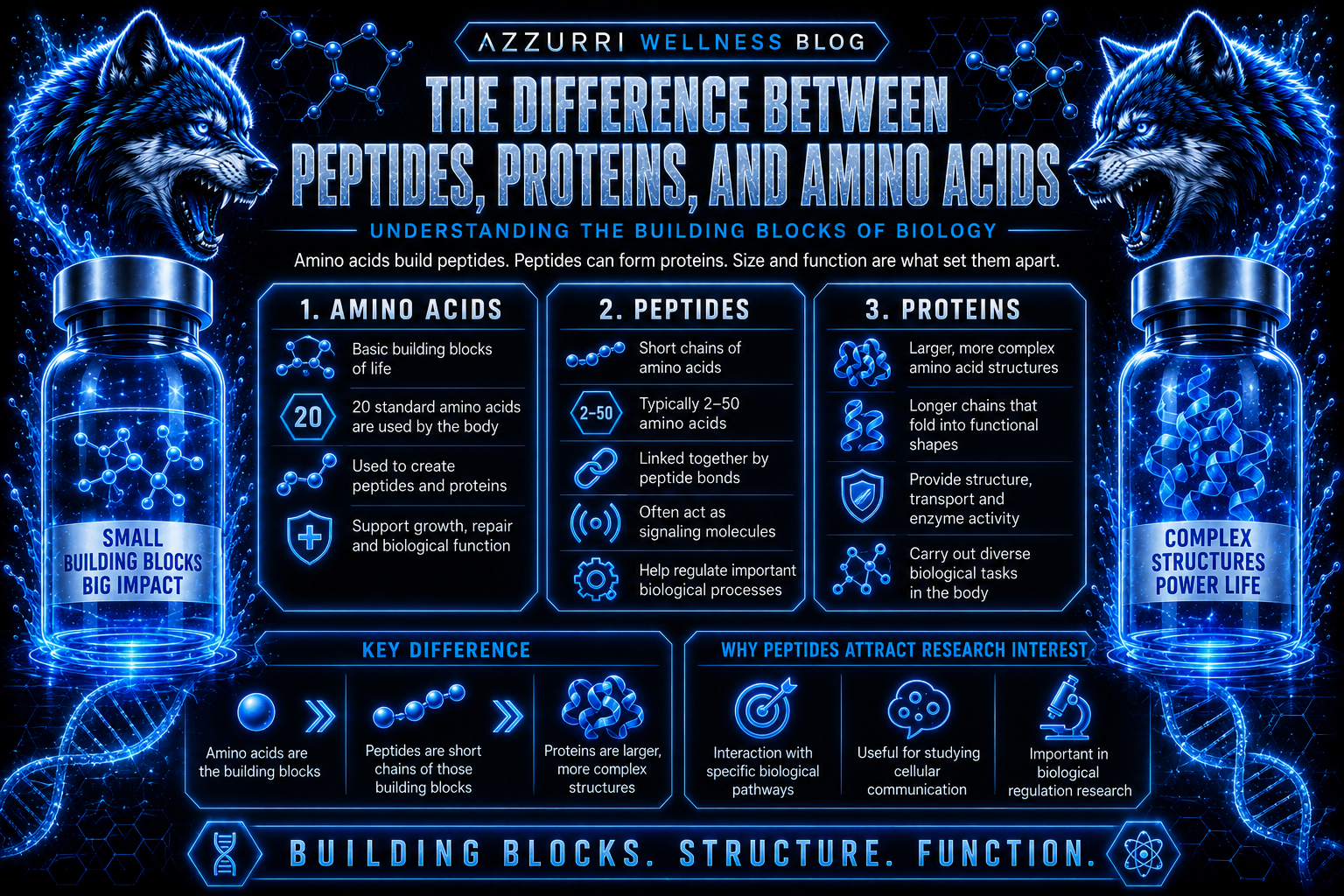
The Difference Between Peptides, Proteins and Amino Acids
Peptides, proteins and amino acids are three points on one spectrum. Get the difference straight and the rest of peptide science falls into place.
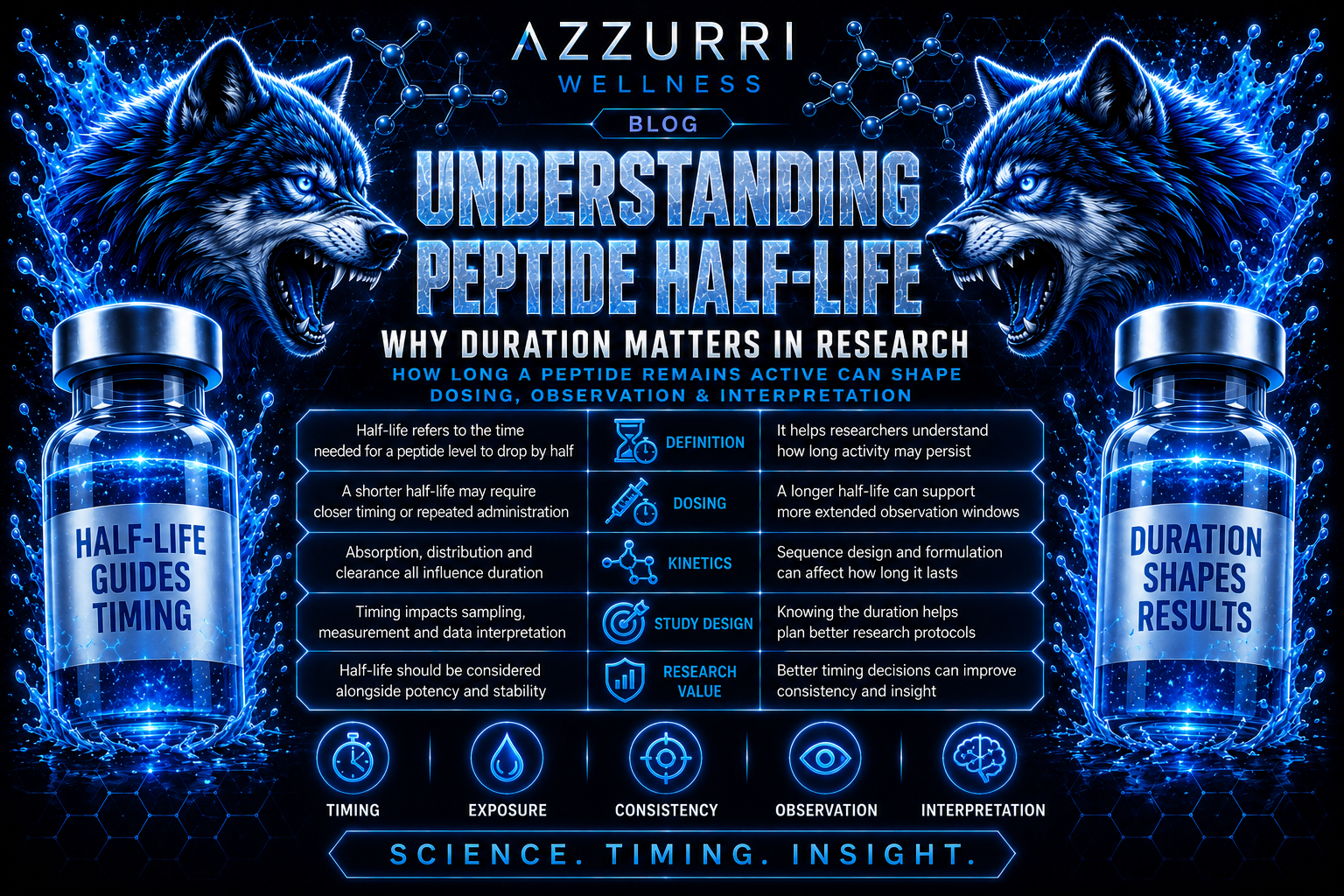
Peptide Half-Life Explained: Why Duration Matters
Half-life decides how long a peptide stays active and how often it needs re-dosing. A plain-English guide to what the numbers really mean.
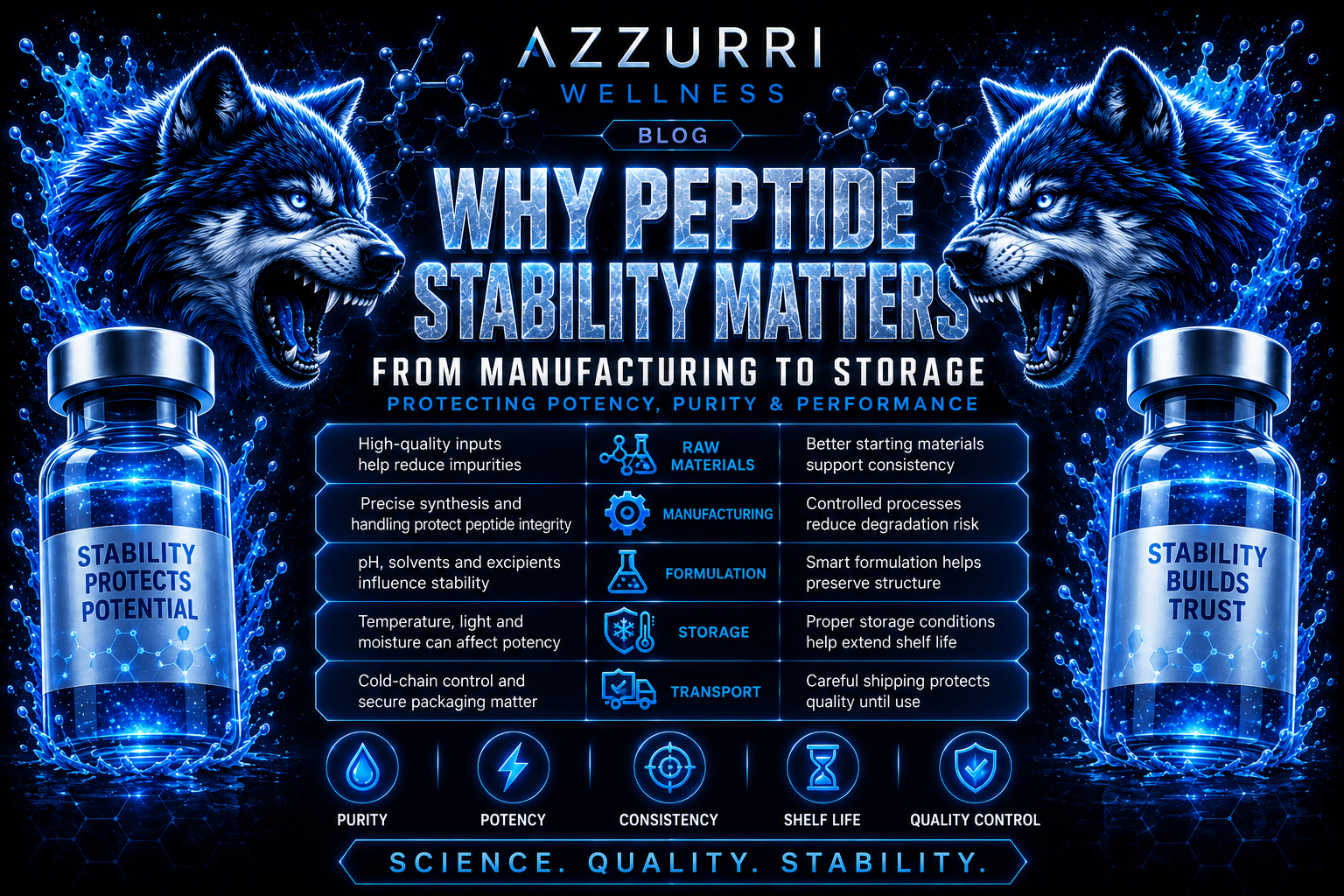
Why Peptide Stability Matters: From Manufacturing to Storage
Peptides degrade invisibly. Here's how they break down, the temperatures that protect potency, and how to store and reconstitute them properly.
What Is Epitalon (Epithalon)? The Longevity Peptide Explained
Epithalon (Epitalon) is marketed as anti-aging. Here's the honest overview: real lab signals on telomerase and sleep rhythm, but thin human evidence.
What Is Sermorelin? How It Works and What Studies Show
A clear look at Sermorelin: what this GHRH peptide is, how it nudges your own growth hormone, why that differs from HGH, and how …
What Are Peptides? A Plain-English Guide
A plain-English guide to what peptides are, how they signal, how they differ from proteins, and why quality and storage matter.

Triple-Agonist Peptides: What the Studies Examine
How triple agonists engage the GIP, GLP-1 and glucagon receptors, why researchers add the third pathway, and what the published studies actually measure.

Triple-Agonist Peptides: Tolerability in Trials
What tolerability signals have been reported for triple-agonist peptides in clinical studies, and how to read an adverse-event table without over-reading it.