Epithalon — also spelled Epitalon — gets marketed as an "anti-aging" peptide. The real story is more mixed: there are some genuinely intriguing lab findings, but the human evidence comes down to a couple of small studies on unrelated endpoints. Here's the honest overview.
What is Epithalon?
It's a synthetic tetrapeptide — just four amino acids (Ala-Glu-Asp-Gly). It was designed from the makeup of epithalamin, an extract of the pineal gland, by a Russian research group led by Vladimir Khavinson starting back in the 1970s. It has never been an approved medicine for any use.
What it's been studied for — and how solid that evidence is
Telomerase and cellular aging (mostly lab studies)
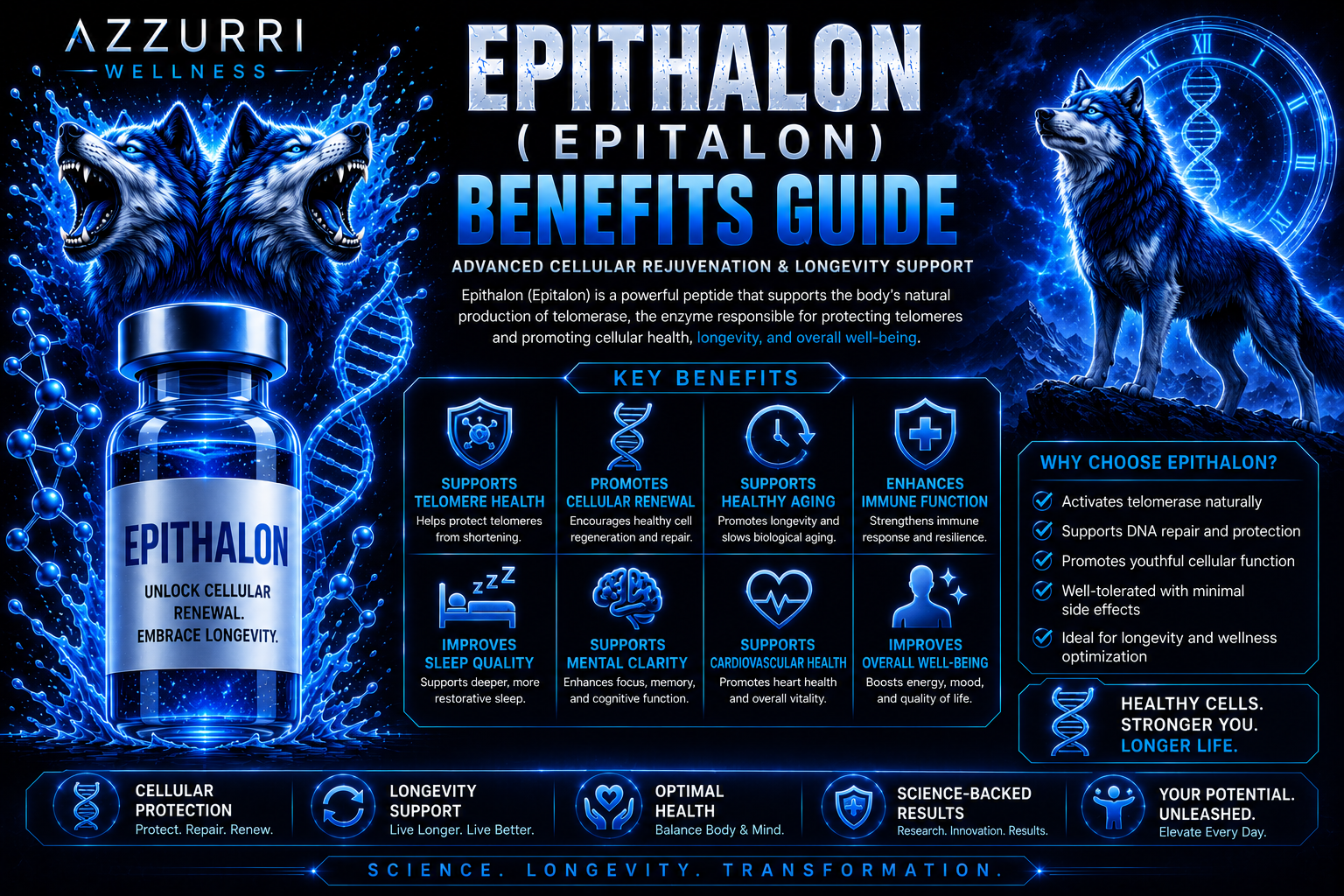
The famous claim is that Epithalon switches on telomerase, the enzyme that maintains the protective caps (telomeres) on your chromosomes. In cell cultures, treated cells kept dividing past the point where untreated ones stopped, and a 2025 independent lab reportedly reproduced telomere lengthening in human cell lines — worth noting, since most earlier work came from one group. Still, this is cell-dish evidence, not proof of an anti-aging benefit in a living person.
Melatonin and sleep rhythm (one small human trial)
In a small study of 75 women given Epithalon sublingually over about three weeks, a melatonin metabolite rose about 1.6-fold, hinting at an effect on circadian signalling. But a separate lab study found no effect on melatonin at all, so the picture is genuinely mixed.
Lifespan and antioxidant claims (animals, and one lab)
Rodent studies from the original group reported modestly longer average lifespan and fewer tumours, plus antioxidant effects in flies and mouse tissue. Those results are real, but they come almost entirely from a single lab and haven't been independently reproduced, so read them with a grain of salt.
What the studies examined
There's no standard clinical dose. The amounts used in studies varied widely by route — small sublingual amounts in the melatonin trial, and very small amounts in the eye studies. The "anti-aging cycles" you'll find online are anecdotal, not from controlled trials.
Safety
The small human studies reported no side effects, but that's not the same as an established safety profile. Reviewers point out that proper short- and long-term toxicity studies still need doing. Long-term human safety just isn't known.
The honest bottom line
Epithalon is a genuinely interesting peptide with real lab signals around telomerase and circadian biology. But the human evidence is thin, and the popular anti-aging pitch runs well ahead of the data. If you're exploring it, do it with realistic expectations and physician guidance. For the fundamentals, start with what are peptides.
Keep reading
- What Are Peptides? A Plain-English Guide
- Sermorelin: Benefits & Overview
- Why Peptide Stability Matters: From Manufacturing to Storage
A quick, important note
Our products are prepared by a Registered 503B outsourcing facility and provided under physician guidance. This article is here to educate, not to replace medical advice. Your physician should be the one guiding peptide selection for your situation.