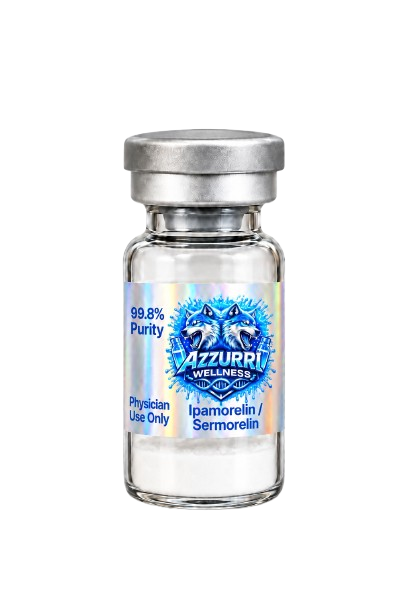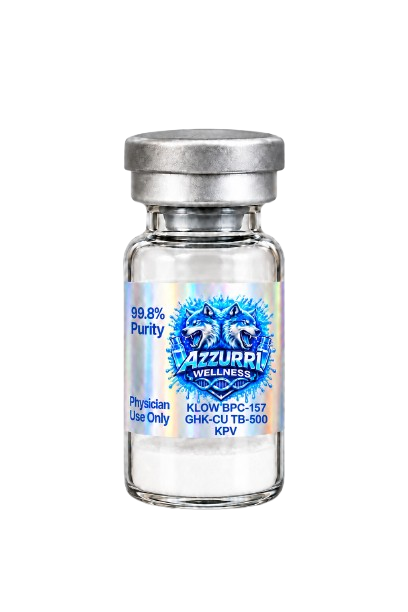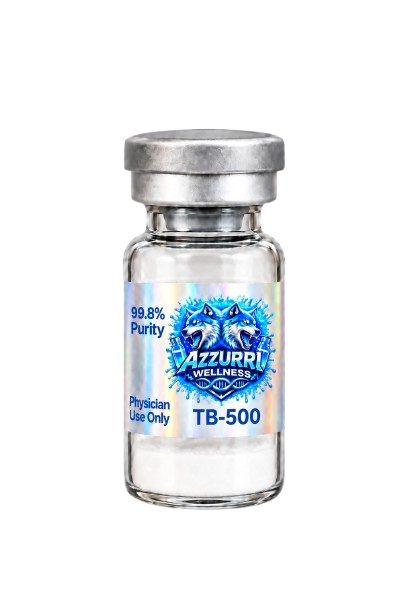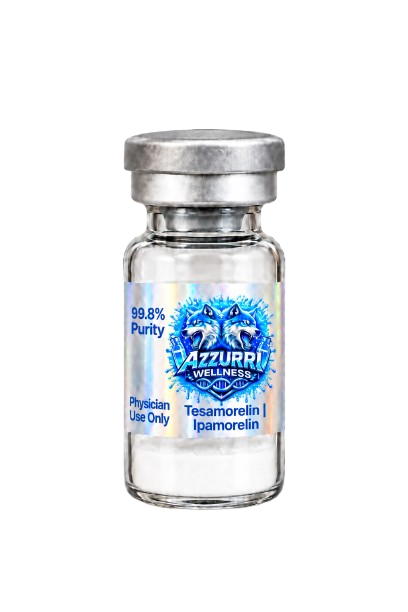
"Peptide" gets thrown around a lot, so let's pin it down. Peptides are some of the body's most important messenger molecules, and once you understand what they actually are, everything else — dosing, half-life, storage — gets a lot easier to follow.
What is a peptide?
A peptide is a short chain of amino acids, the same building blocks that make up proteins, strung together by peptide bonds. Most have somewhere between 2 and 50 of them. The order of those amino acids sets the peptide's shape, and its shape sets what it does, so even a tiny peptide can have a very specific job.
Peptides vs. proteins
The difference mostly comes down to size. Chains of roughly 50 amino acids or fewer are peptides; longer, folded ones are proteins. Peptides tend to be simpler, easier to make, and easier to study on their own. Insulin sits right on the line, a small protein built from peptide chains.
How peptides send signals
A lot of peptides work like little messages. They latch onto a specific receptor on a cell and set off a response: telling the pituitary to release growth hormone, signalling that you're full, nudging tissue to repair. That lock-and-key precision is the whole appeal. A good peptide can push one pathway without stirring up everything around it.
The main types you'll hear about
- Metabolic (incretin) peptides like GLP-1, dual-agonist and triple-agonist peptides, which act on GLP-1 and related receptors tied to appetite and blood sugar.
- Growth-hormone peptides like Sermorelin, CJC-1295 and Ipamorelin, which coax your body into releasing its own growth hormone.
- Repair peptides like BPC-157 and TB-500, studied mostly in animals for tissue healing.
- Other signalling peptides such as GHK-Cu for skin, or Epithalon, studied for circadian and cellular-aging pathways.
Why some last minutes and others last a week
On their own, most peptides get broken down by enzymes within minutes. The modern ones are often engineered to stick around, usually by adding a fatty-acid tail that binds to albumin in the blood. That's how a long-acting GLP-1 peptide manages a multi-day run. We get into the details in our guide to peptide half-life.
Are peptides safe? Quality is a big part of the answer
It depends on the peptide, the dose, and — this part gets overlooked — the quality of what's in the vial. Purity, storage and physician oversight all matter, which is why sourcing from a Registered 503B facility beats an unverified seller. Our guide to peptide stability explains how handling affects potency.
Keep reading
- Peptide Half-Life Explained: Why Duration Matters
- Why Peptide Stability Matters: From Manufacturing to Storage
- Triple vs Dual Agonist Peptides Compared
- BPC-157: What the Preclinical Studies Examine
A quick, important note
Our products are prepared by a Registered 503B outsourcing facility and provided under physician guidance. This article is here to educate, not to replace medical advice. Your physician should be the one guiding peptide selection and dosing for your situation.