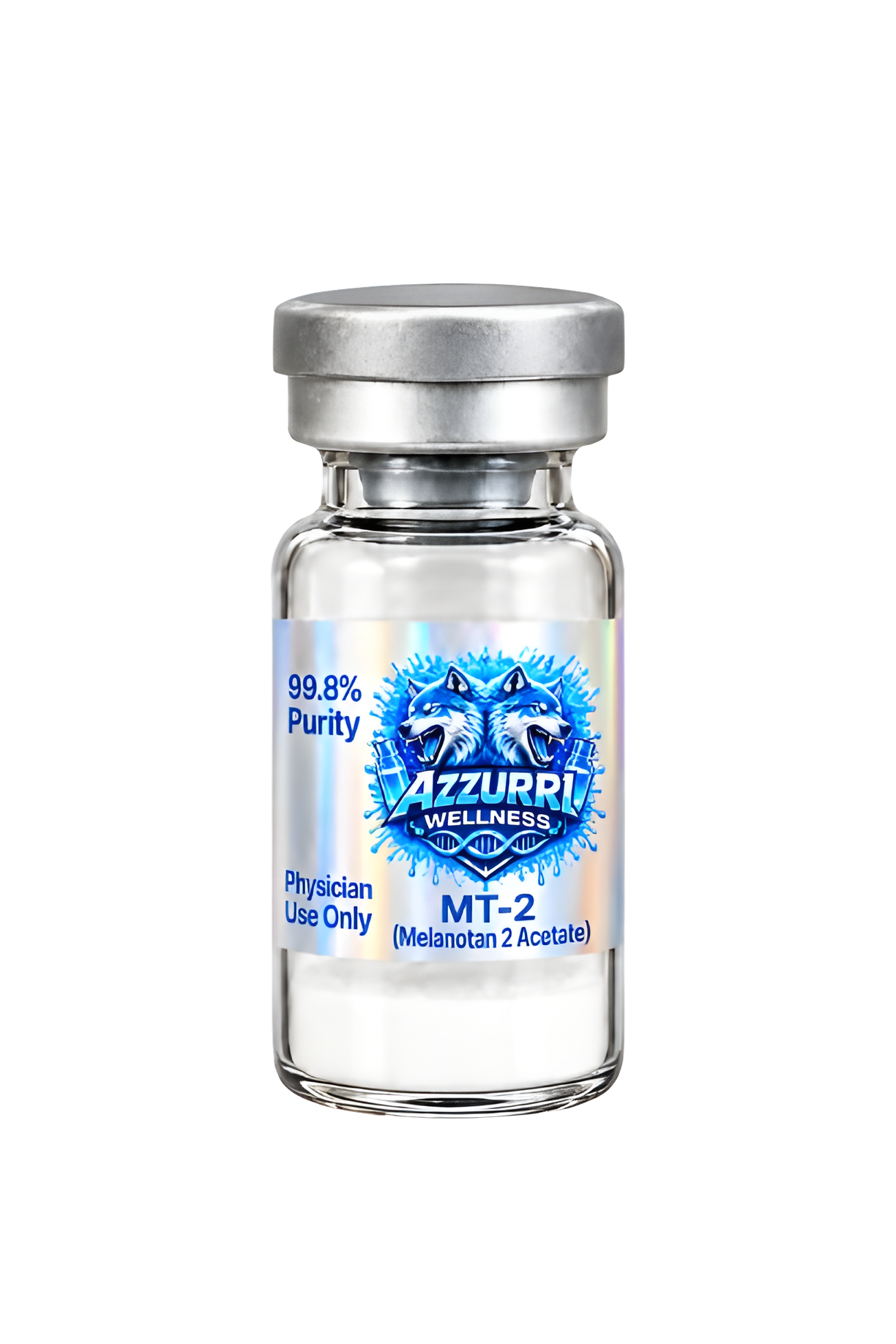
Melanotan 2 (MT-2, or Melanotan II) is a synthetic peptide that copies alpha-MSH, the hormone that tells skin cells to make melanin. It was developed by researchers at the University of Arizona as a way to tan the skin without sunlight, and early studies found it also affected sexual arousal. It has never been approved as a medicine, and dermatologists have published a series of warnings about unsupervised use.
This guide explains what the MT-2 peptide is, how it works, what the research shows, and what is known about its risks.
What is Melanotan 2?
MT-2 is a cyclic seven-amino-acid analog of alpha-MSH (alpha-melanocyte-stimulating hormone). Its full name describes its structure: Ac-Nle-cyclo[Asp-His-D-Phe-Arg-Trp-Lys]-NH2. The ring ("cyclic") structure makes it much more potent and longer-lasting than natural alpha-MSH, which is broken down quickly in the body.
It is closely related to two other peptides:
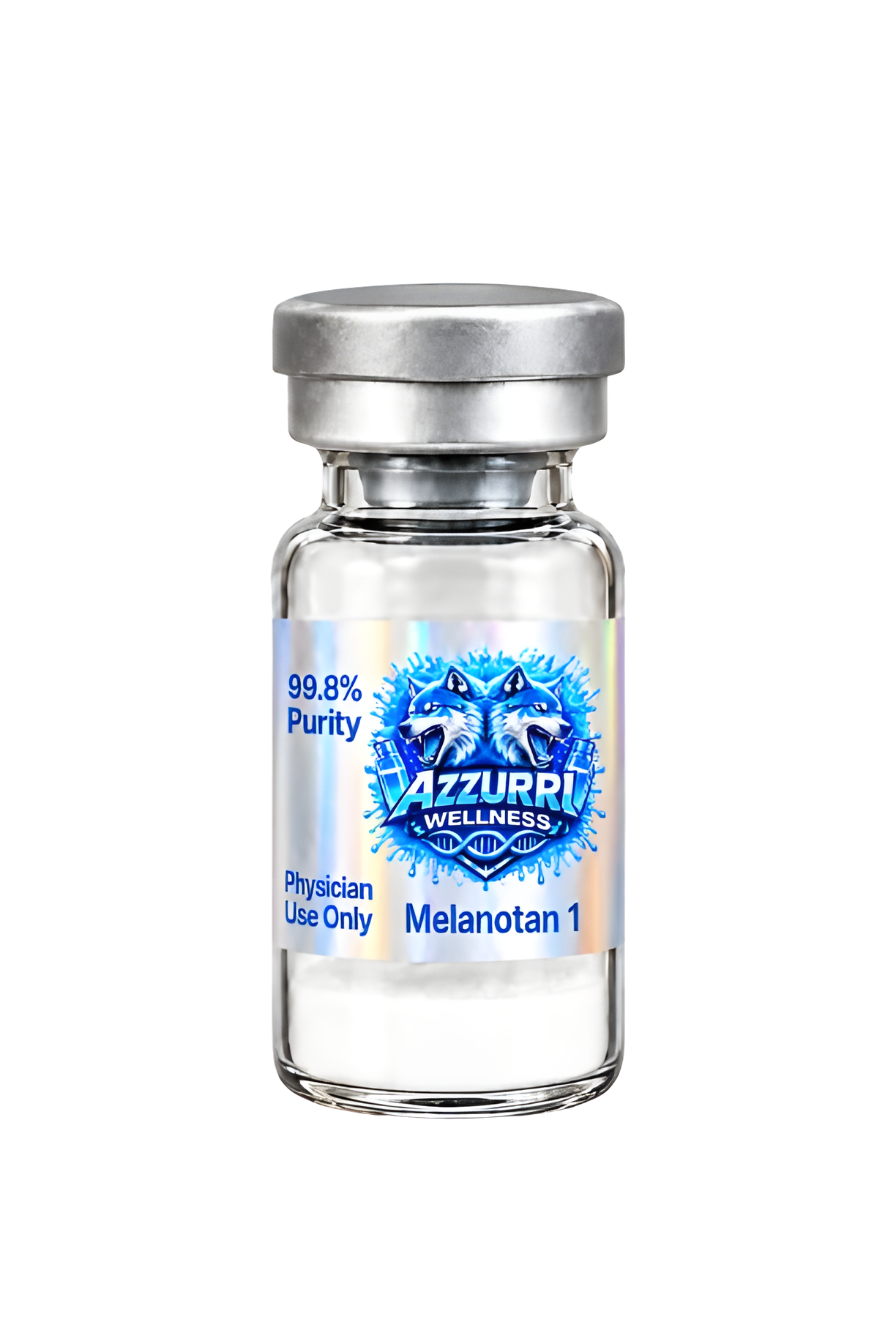
- Melanotan 1 (afamelanotide), a linear analog that is more selective for the skin's pigment receptor. Afamelanotide is the only alpha-MSH analog approved as a medicine, for a small number of conditions (Habbema et al., 2017).
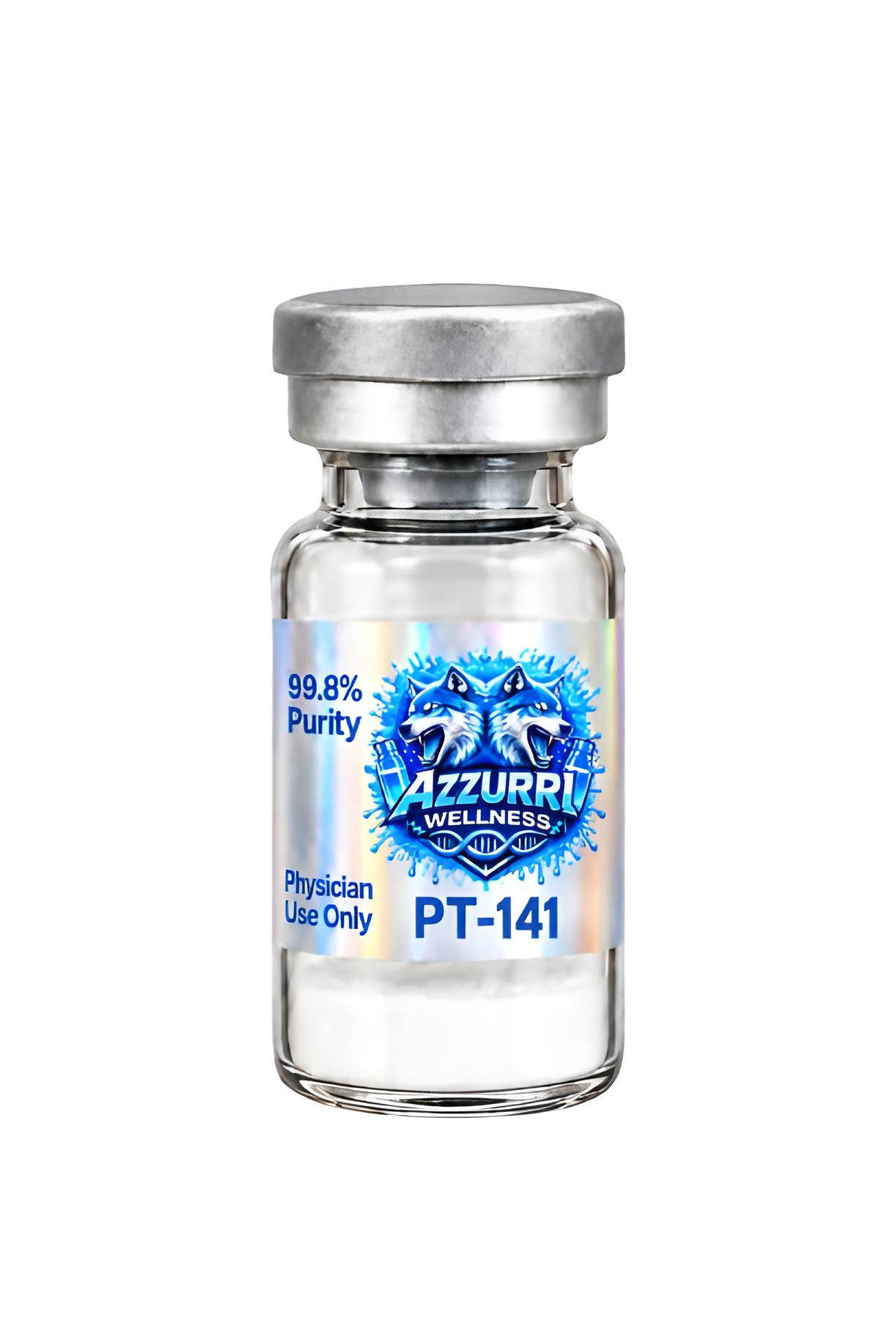
- PT-141 (bremelanotide), which was developed from Melanotan 2 for its effect on arousal rather than tanning.
How MT-2 works
Alpha-MSH acts on a family of melanocortin receptors (MC1R to MC5R). MT-2 activates several of them, which is why it has such a broad range of effects:
- MC1R on melanocytes, the pigment cells in skin. Activating MC1R switches on production of eumelanin, the dark pigment behind a tan, without needing UV light.
- MC4R in the brain, which is linked to sexual arousal and appetite. This is the receptor PT-141 was later optimised for.
Because it acts on so many receptors at once, MT-2 is described as non-selective. That broad action is behind both its effects and many of its side effects.
What the research shows
Tanning
- First human study (Dorr et al., 1996). In a small pilot phase 1 study, three healthy men were given MT-2 or saline by injection under the skin on alternating days. Two of them showed increased pigmentation in the face, upper body and buttocks a week after the last dose, measured by skin reflectance. Mild nausea was reported at most doses, along with a stretching and yawning response, spontaneous erections and, at the highest dose, drowsiness and fatigue in one man.
Sexual function
- Psychogenic erectile dysfunction (Wessells et al., 1998). In a double-blind, placebo-controlled crossover study, MT-2 started erections in 8 of 10 men with erectile dysfunction of no known physical cause. Nausea, stretching and yawning, and reduced appetite were more common than with placebo.
- Organic erectile dysfunction (Wessells et al., 2000). In 10 men with physical risk factors for erectile dysfunction, MT-2 started erections after 12 of 19 injections, versus 1 of 21 placebo doses, and increased self-reported sexual desire. Four of the 19 injections caused severe nausea.
- The wider picture (Ramez et al., 2026). A 2026 systematic review of peptides for male sexual dysfunction found that melanocortin agonists had the most consistent evidence for improving erections, but noted that the studies were small, short and not compared with standard treatments.
These findings led to the development of PT-141, rather than to MT-2 itself becoming a medicine.
Melanotan 2 side effects and risks
This is the part of the MT-2 story that matters most.
- Common effects in studies. Nausea (sometimes severe), yawning and stretching, reduced appetite, drowsiness and spontaneous erections were all seen in the early trials (Dorr et al., 1996; Wessells et al., 1998, 2000).
- Changes in moles. A review by Dutch dermatologists found growing numbers of case reports linking unregulated melanotan use to darkening of existing moles and the appearance of new, sometimes atypical, moles (Habbema et al., 2017).
- Eruptive moles in a high-risk patient (Cardones & Grichnik, 2009). A man with a history of melanoma and many atypical moles developed crops of new pigmented moles with atypical features after using an alpha-MSH analog. The moles lightened after he stopped.
- Melanoma reports. Four case reports have described melanomas arising during or shortly after melanotan use (Habbema et al., 2017), including a 20-year-old woman who used MT-2 with sunbeds (Hjuler & Lorentzen, 2014). These reports do not prove that MT-2 causes melanoma, but they are the reason several national health agencies have issued warnings about it.
Long-term safety data in people do not exist. MT-2 is not an approved medicine. People with a personal or family history of melanoma, or with many or unusual moles, face the greatest concern. Anyone considering MT-2 should only do so under a physician's guidance, with regular skin checks.
MT-2 vs Melanotan 1 vs PT-141
| Melanotan 2 | Melanotan 1 (afamelanotide) | PT-141 (bremelanotide) | |
|---|---|---|---|
| Structure | Cyclic, 7 amino acids | Linear, 13 amino acids | Cyclic, 7 amino acids |
| Receptors | Several (non-selective) | Mainly MC1R in skin | Mainly MC4R in the brain |
| Main research focus | Tanning and arousal | Pigmentation and light tolerance | Sexual desire |
| Approved medicine | No | Yes, for limited conditions | Yes, for one condition in women |
For more on each, see our guide to Melanotan 1, the PT-141 guide, and the Melanotan 1 and PT-141 product pages.
Buying Melanotan 2: what to check
- A certificate of analysis. Our Melanotan 2 is HPLC-tested and third-party lab verified, and the certificate of analysis for your batch ships with your order. Unregulated "tanning injection" products are one of the reasons for the safety warnings above.
- The right peptide. MT-2, Melanotan 1 and PT-141 are different molecules with different effects. Check the name and sequence on the label.
- Mixing. It is a lyophilized powder reconstituted with bacteriostatic water. Dosing is for your physician to decide; the peptide reconstitution calculator handles the mixing math.
References
- Dorr RT, et al. Evaluation of melanotan-II, a superpotent cyclic melanotropic peptide, in a pilot phase-I clinical study. Life Sci. 1996;58(20):1777–1784. PubMed
- Wessells H, et al. Synthetic melanotropic peptide initiates erections in men with psychogenic erectile dysfunction. J Urol. 1998;160(2):389–393. PubMed
- Wessells H, et al. Effect of an alpha-melanocyte stimulating hormone analog on penile erection and sexual desire in men with organic erectile dysfunction. Urology. 2000;56(4):641–646. PubMed
- Ramez M, et al. Peptides for male sexual dysfunction: a systematic review of emerging evidence. J Sex Med. 2026;23(12). PubMed
- Habbema L, et al. Risks of unregulated use of alpha-melanocyte-stimulating hormone analogues: a review. Int J Dermatol. 2017;56(10):975–980. PubMed
- Cardones AR, Grichnik JM. Alpha-melanocyte-stimulating hormone-induced eruptive nevi. Arch Dermatol. 2009;145(4):441–444. PubMed
- Hjuler KF, Lorentzen HF. Melanoma associated with the use of melanotan-II. Dermatology. 2014;228(1):34–36. PubMed
Written by the Azzurri Wellness Research Team and checked against the cited studies. Educational only, not medical advice.