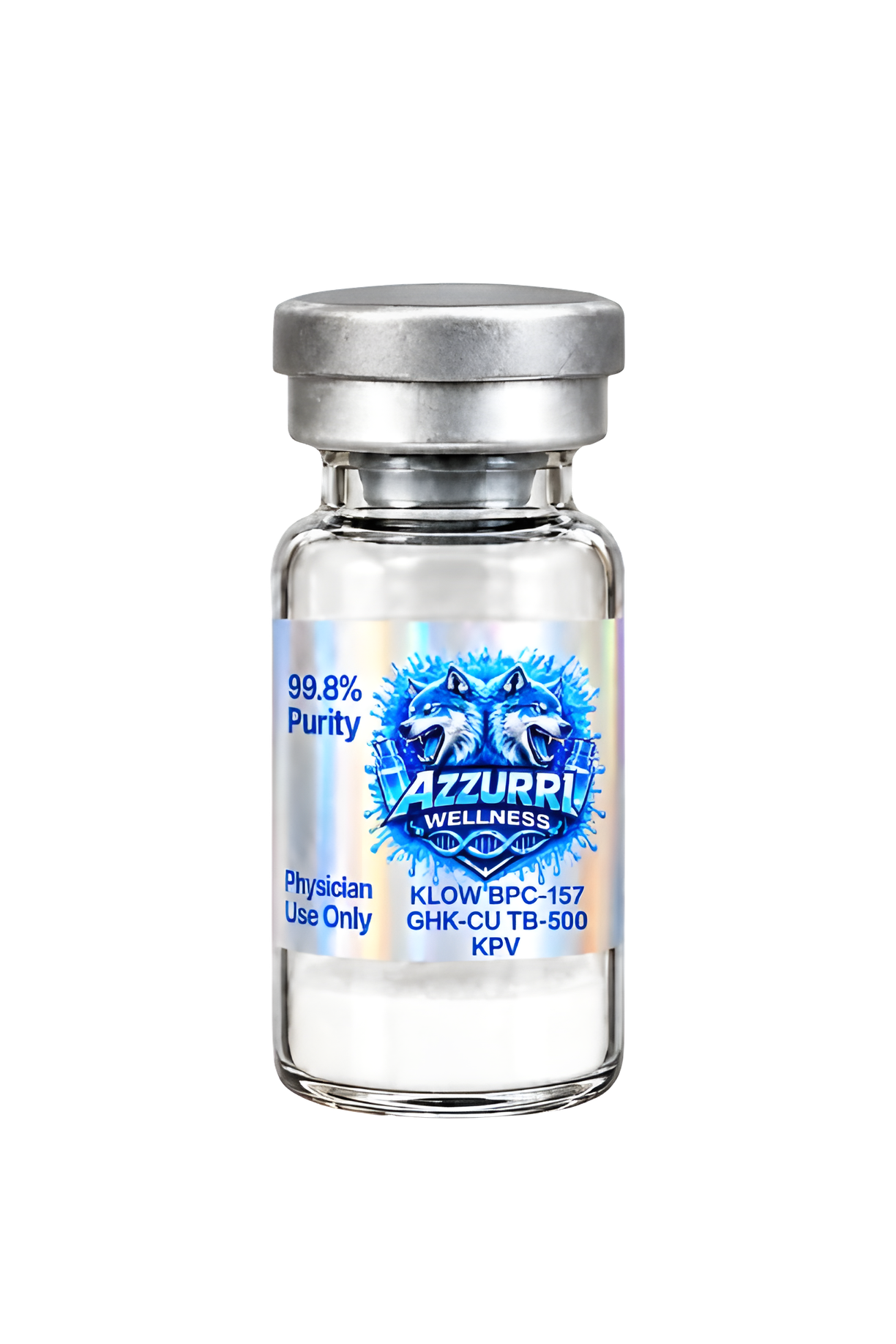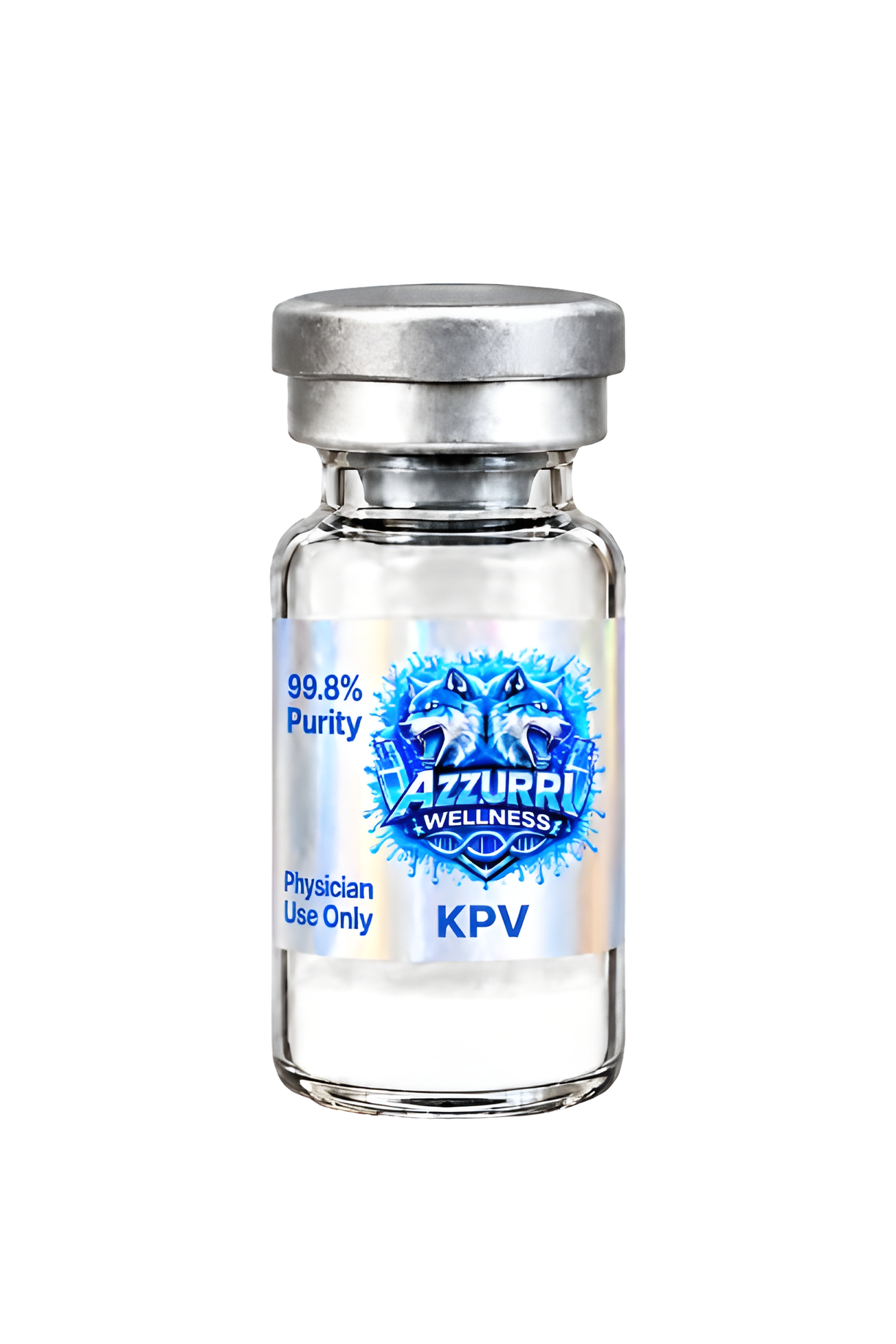
KPV is a peptide made of just three amino acids: lysine, proline and valine. It is the tail end of alpha-MSH (alpha-melanocyte-stimulating hormone), a hormone the body makes that has anti-inflammatory activity as well as its better-known role in skin pigment. KPV keeps the anti-inflammatory part and drops the pigment part, which is why researchers have studied it for inflammation, especially in the gut.
This guide explains what the KPV peptide is, how it is thought to work, what the research actually shows, and what is still unknown.
What is KPV?
KPV is a tripeptide: a chain of three amino acids, Lys-Pro-Val. In alpha-MSH, which is 13 amino acids long, these are positions 11 to 13, so you will also see KPV written as α-MSH(11-13). It is the smallest piece of alpha-MSH that still shows anti-inflammatory activity in laboratory studies.
Because it is so small, KPV behaves differently from its parent hormone. Alpha-MSH works mainly by binding melanocortin receptors on the surface of cells, including MC1R, the receptor that drives tanning. KPV is not known for pigment effects, and much of its activity appears to happen inside the cell instead.
How KPV works
Two features of KPV explain most of the research interest.
It gets inside cells through PepT1
PepT1 is a transporter that carries small peptides from the gut into the cells lining it. It is found at low levels in the healthy colon and is increased during inflammatory bowel disease. In cell and mouse studies, KPV was taken up through PepT1 and worked at very low (nanomolar) concentrations (Dalmasso et al., 2008). That makes the inflamed gut a natural focus for KPV research.
It dampens inflammatory signalling
Inside the cell, KPV reduced the activity of NF-κB and MAP-kinase pathways, the switches that turn on inflammatory cytokines. In airway cells it blocked the p65 (RelA) part of NF-κB from reaching the nucleus, where it would otherwise switch on inflammatory genes (Land, 2012).
Receptor or no receptor?
How much of KPV's effect depends on melanocortin receptors is still debated. In mice whose MC1R did not work, KPV still reduced colitis, which suggests its effects are at least partly independent of MC1R (Kannengiesser et al., 2008). On the other hand, in human skin cells and in cells engineered to carry MC1R, KPV triggered calcium signalling, so it may interact with the receptor in some tissues (Elliott et al., 2004). Earlier work also separated KPV's anti-inflammatory effect from the receptor activity of alpha-MSH's core sequence (Getting et al., 2003).
What the research shows
Almost all KPV research is in cells and animals. Here are the main findings.
Gut inflammation
- Two mouse colitis models (Kannengiesser et al., 2008). KPV-treated mice with chemically induced colitis recovered earlier, regained more weight and had less inflammatory infiltration in the colon. KPV also helped in a second, immune-driven colitis model, and in mice lacking a working MC1R it protected all treated animals from dying of colitis.
- Uptake through PepT1 (Dalmasso et al., 2008). KPV absorbed through PepT1 reduced inflammatory signalling in gut cells and reduced disease severity in two mouse colitis models.
- Targeted delivery (Xiao et al., 2017). Researchers packed KPV into nanoparticles designed to reach colon cells and immune cells. Given by mouth in a protective gel, the particles reduced damage to the gut lining and lowered the inflammatory signal TNF-α in mice with colitis, more than KPV particles without the targeting coat.
- Inflammation-linked tumours in mice (Viennois et al., 2016). In a mouse model of colitis-associated cancer, KPV reduced tumour development in normal mice but had no effect in mice lacking PepT1, which supports the idea that KPV needs PepT1 to work in the gut.
Skin and airways
- Skin cells (Elliott et al., 2004). In human keratinocytes, KPV produced rapid calcium signals rather than the cyclic-AMP signal alpha-MSH usually uses, showing it does not simply copy its parent hormone.
- Airway cells (Land, 2012). In airway lining cells, KPV suppressed inflammatory signalling by stopping NF-κB from entering the nucleus.
In people
We found no published clinical trials of KPV in humans. Its effects, the right amount and its safety in people have not been established.
What KPV is studied for
Based on the research above, KPV is studied mainly for:
- Gut health and inflammatory bowel conditions, through its uptake by PepT1 in the gut lining.
- Inflammatory signalling in general, through NF-κB and the inflammatory cytokines it controls.
- Skin conditions, as part of wider research on alpha-MSH and the skin.
None of these is an established use in people. They are the areas where the laboratory evidence points.
KPV side effects and safety
Because there are no human trials, there is no reliable side-effect profile for KPV. The animal studies did not report obvious toxicity, and the nanoparticle work found the particles were compatible with gut cells, but that is not the same as human safety data. Long-term effects are unknown. Anyone considering KPV should do so only under a physician's guidance.
KPV, alpha-MSH and the KLOW blend
| Peptide | What it is | Main research focus |
|---|---|---|
| Alpha-MSH | 13-amino-acid hormone | Skin pigment through MC1R, plus anti-inflammatory activity |
| KPV | Last three amino acids of alpha-MSH | Anti-inflammatory signalling, mainly in the gut |
| KLOW blend | GHK-Cu, BPC-157, TB-500 and KPV in one vial | Skin and tissue research, with KPV added for inflammation |
KPV is also the "K" in KLOW, which is the GLOW blend (GHK-Cu, BPC-157 and TB-500) with KPV added. The blend itself has not been studied as a combination.
Buying KPV: what to check
- A certificate of analysis. Our KPV peptide is HPLC-tested and third-party lab verified, and the certificate of analysis for your batch ships with your order.
- The form. Ours is a lyophilized (freeze-dried) powder that is reconstituted with bacteriostatic water. It is not the same product as a KPV cream or capsule.
- Dosing. Amount and frequency are for your physician to set. Once they have, our peptide reconstitution calculator works out the mixing math.
References
- Dalmasso G, et al. PepT1-mediated tripeptide KPV uptake reduces intestinal inflammation. Gastroenterology. 2008;134(1):166–178. PubMed
- Kannengiesser K, et al. Melanocortin-derived tripeptide KPV has anti-inflammatory potential in murine models of inflammatory bowel disease. Inflamm Bowel Dis. 2008;14(3):324–331. PubMed
- Xiao B, et al. Orally targeted delivery of tripeptide KPV via hyaluronic acid-functionalized nanoparticles efficiently alleviates ulcerative colitis. Mol Ther. 2017;25(7):1628–1640. PubMed
- Viennois E, et al. Critical role of PepT1 in promoting colitis-associated cancer and therapeutic benefits of the anti-inflammatory PepT1-mediated tripeptide KPV in a murine model. Cell Mol Gastroenterol Hepatol. 2016;2(3):340–357. PubMed
- Elliott RJ, et al. Alpha-melanocyte-stimulating hormone, MSH 11-13 KPV and adrenocorticotropic hormone signalling in human keratinocyte cells. J Invest Dermatol. 2004;122(4):1010–1019. PubMed
- Getting SJ, et al. Dissection of the anti-inflammatory effect of the core and C-terminal (KPV) α-MSH peptides. J Pharmacol Exp Ther. 2003;306(2):631–637. PubMed
- Land SC. Inhibition of cellular and systemic inflammation by melanocortin-related peptides: mechanism of KPV action. Int J Physiol Pathophysiol Pharmacol. 2012;4(2):59–73. PMC
Written by the Azzurri Wellness Research Team and checked against the cited studies. Educational only, not medical advice.