PT-141 is a synthetic peptide that works on sexual desire through the brain rather than through blood flow. Its generic name is bremelanotide. It was developed from Melanotan 2, and in 2019 it was approved in the United States as a prescription medicine for low sexual desire in premenopausal women. That approval rests on two large trials, which makes PT-141 one of the best-studied peptides in this area.
This guide explains what the PT-141 peptide is, how it works, what the trials found in women and men, and what its side effects are.
What is PT-141?
PT-141 is a cyclic seven-amino-acid analog of alpha-MSH (alpha-melanocyte-stimulating hormone), a hormone that acts on melanocortin receptors. "PT-141" was its development code; "bremelanotide" is its generic name. They are the same molecule.
It came out of research on Melanotan 2, a tanning peptide that was found to cause spontaneous erections and increased sexual desire in early studies. PT-141 was developed for that arousal effect rather than for tanning.
How PT-141 works
PT-141 is a melanocortin-receptor agonist with high affinity for MC4R, a receptor found mainly in the brain (Molinoff et al., 2003). In rats it activates the medial preoptic area and other hypothalamic and limbic regions involved in sexual motivation, possibly through dopamine signalling (Pfaus et al., 2007).
This is the main difference from the best-known sexual-function medicines. PDE5 inhibitors, the standard erectile-dysfunction tablets, work on blood flow in the genitals and need sexual desire to already be present. PT-141 works on the desire side, in the brain.
What the research shows
In women
- Two phase 3 trials (Kingsberg et al., 2019). The RECONNECT trials enrolled 1,267 premenopausal women with hypoactive sexual desire disorder (HSDD), meaning persistently low desire that causes distress. Over 24 weeks, women using bremelanotide as needed had statistically significant improvements in sexual desire and reductions in related distress compared with placebo. The improvements were modest in size.
- One-year follow-up (Simon et al., 2019). In an open-label extension, 684 women continued for up to a year. The improvements were maintained and no new safety concerns appeared.
- Who it worked for (Simon et al., 2022). Across 1,202 trial participants, the effect compared with placebo was broadly similar regardless of age, weight, body mass index or testosterone level.
In men
- Early studies (Diamond et al., 2004). A nasal form of PT-141 was tested in healthy men and men with mild-to-moderate erectile dysfunction. It had a half-life of about two hours, and flushing and nausea were the main side effects. Development in men did not lead to an approved product.
- Systematic review (Ramez et al., 2026). A 2026 review of peptides for male sexual dysfunction found that melanocortin agonists, the class PT-141 belongs to, had the most consistent evidence for improving erections, including in men who had not responded to standard erectile-dysfunction tablets. The authors stressed that the studies were small and short.
In animals
- Sexual behaviour in rats (Pfaus et al., 2007). Bremelanotide selectively increased solicitation behaviour in female rats, a measure of sexual motivation, without changing reflexive sexual behaviour.
PT-141 side effects
The phase 3 programme gives PT-141 a well-described side-effect profile (Clayton et al., 2022):
- Nausea was the most common side effect, affecting about 40% of women compared with about 1% on placebo, and the main reason people stopped.
- Flushing (about 20%) and headache (about 11%) were the next most common.
- Blood pressure rose slightly and briefly after each dose. In one study, systolic pressure rose by about 3 mmHg in the first hours after the higher doses (White et al., 2017), so people with high blood pressure or heart disease need particular care.
- Skin darkening in small patches occurred in more than a third of people given doses on 16 days in a row.
PT-141 should only be used under a physician's guidance, who can weigh these effects against your health history.
PT-141 vs Melanotan 2 vs PDE5 inhibitors
| PT-141 (bremelanotide) | Melanotan 2 | PDE5 inhibitors | |
|---|---|---|---|
| Where it acts | Brain (mainly MC4R) | Several melanocortin receptors, skin and brain | Blood vessels in the genitals |
| Main target | Desire | Tanning and arousal | Erections |
| Large trials | Yes, in premenopausal women | No | Yes |
Read more in our guide to Melanotan 2.
PT-141 blends
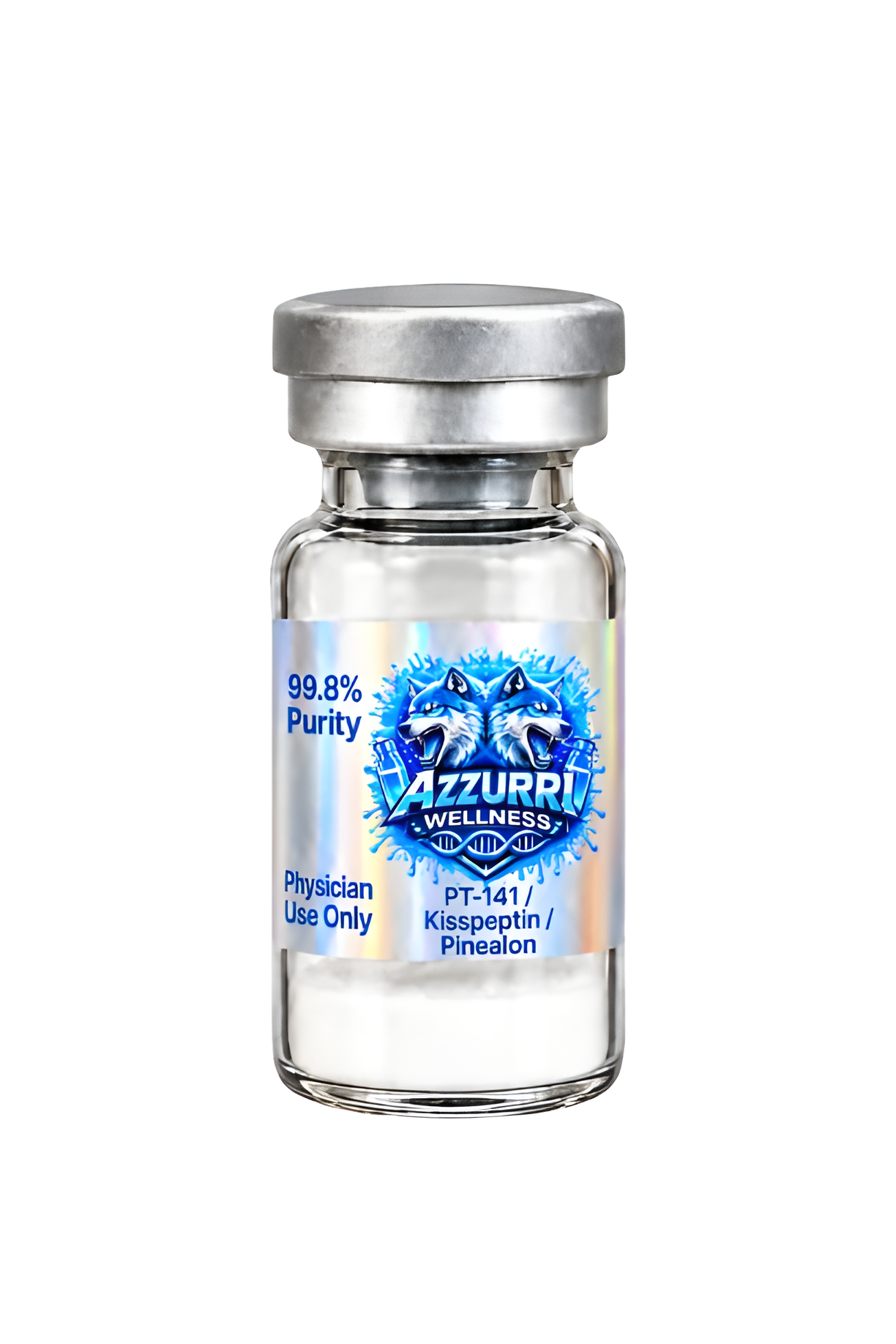
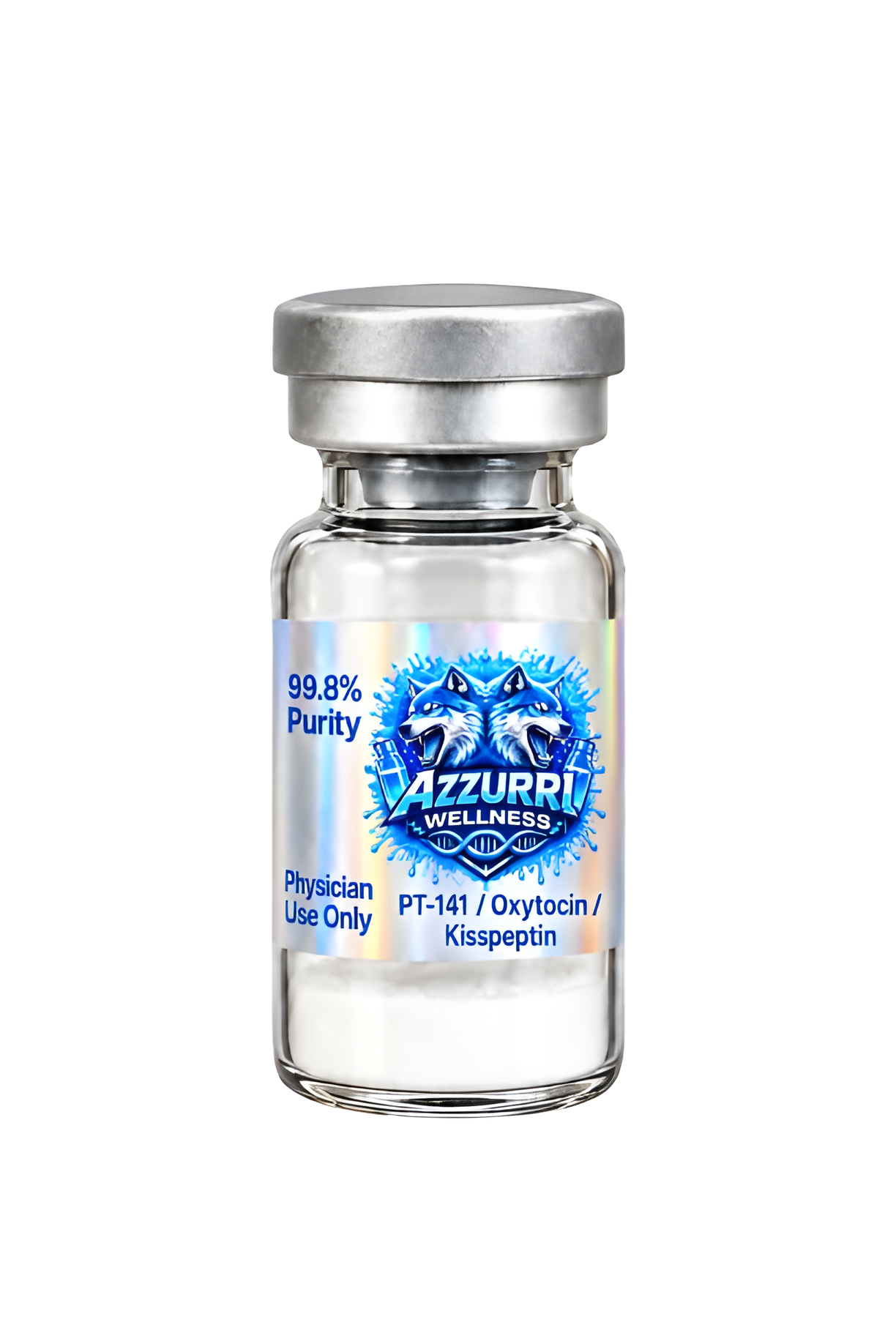
PT-141 is also combined with other peptides that act through different systems. Our PT-141, oxytocin and kisspeptin blend and PT-141, kisspeptin and pinealon blend fix the ratio between them. The blends themselves have not been tested in clinical trials, so choosing between a single peptide and a blend is a decision for your physician.
Buying PT-141: what to check
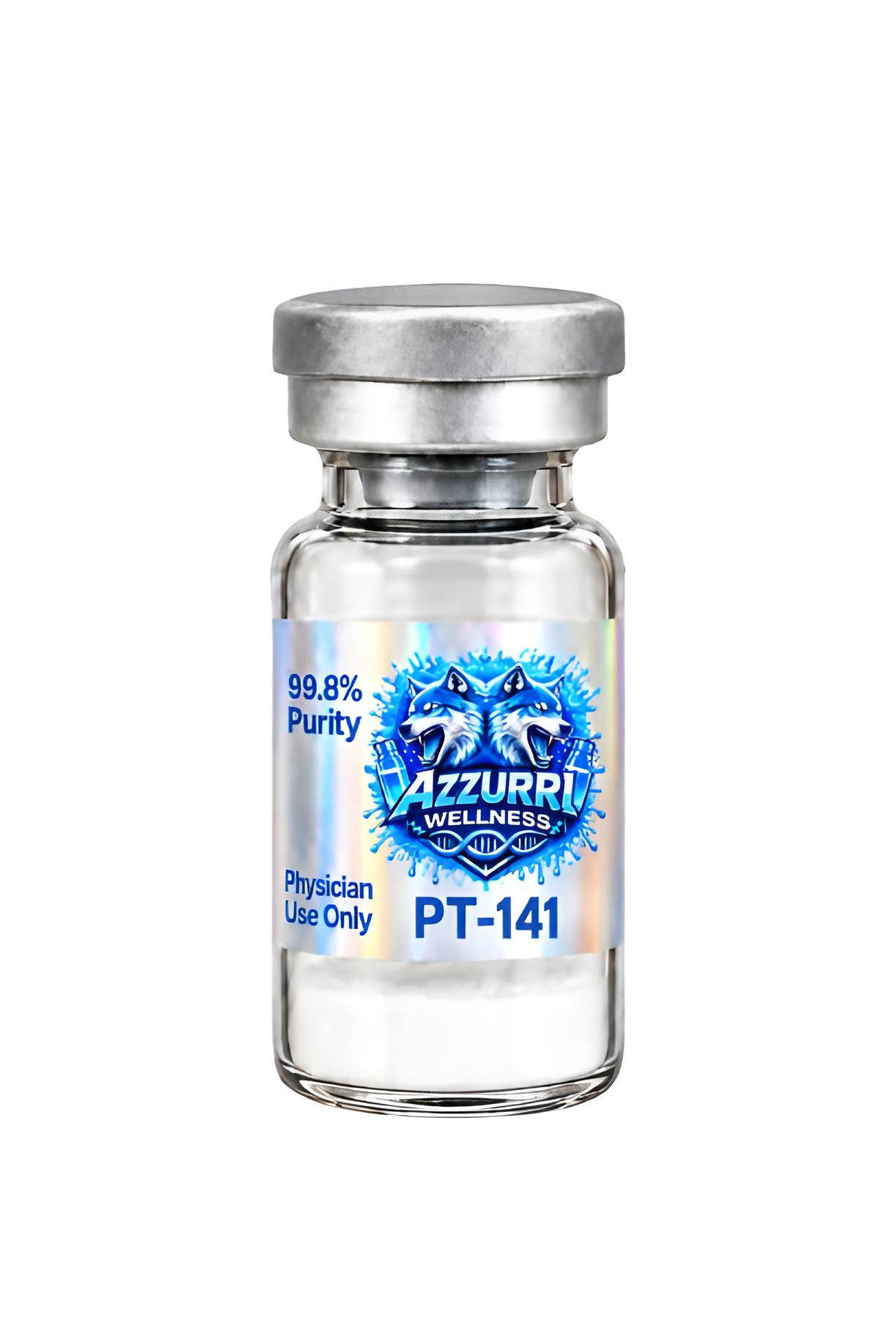
- A certificate of analysis. Our PT-141 is HPLC-tested and third-party lab verified, and the certificate of analysis for your batch ships with your order.
- The right peptide. PT-141 and Melanotan 2 are related but different. Check the name and sequence on the label.
- Mixing. It is a lyophilized powder reconstituted with bacteriostatic water. Dosing is for your physician to decide; the peptide reconstitution calculator handles the mixing math.
References
- Kingsberg SA, et al. Bremelanotide for the treatment of hypoactive sexual desire disorder: two randomized phase 3 trials. Obstet Gynecol. 2019;134(5):899–908. PubMed
- Simon JA, et al. Long-term safety and efficacy of bremelanotide for hypoactive sexual desire disorder. Obstet Gynecol. 2019;134(5):909–917. PubMed
- Simon JA, et al. Prespecified and integrated subgroup analyses from the RECONNECT phase 3 studies of bremelanotide. J Womens Health (Larchmt). 2022;31(3):391–400. PubMed
- Clayton AH, et al. Safety profile of bremelanotide across the clinical development program. J Womens Health (Larchmt). 2022;31(2):171–182. PubMed
- White WB, et al. Usefulness of ambulatory blood pressure monitoring to assess the melanocortin receptor agonist bremelanotide. J Hypertens. 2017;35(4):761–768. PubMed
- Diamond LE, et al. Double-blind, placebo-controlled evaluation of the safety, pharmacokinetic properties and pharmacodynamic effects of intranasal PT-141, a melanocortin receptor agonist, in healthy males and patients with mild-to-moderate erectile dysfunction. Int J Impot Res. 2004;16(1):51–59. PubMed
- Ramez M, et al. Peptides for male sexual dysfunction: a systematic review of emerging evidence. J Sex Med. 2026;23(12). PubMed
- Molinoff PB, et al. PT-141: a melanocortin agonist for the treatment of sexual dysfunction. Ann N Y Acad Sci. 2003;994:96–102. PubMed
- Pfaus J, Giuliano F, Gelez H. Bremelanotide: an overview of preclinical CNS effects on female sexual function. J Sex Med. 2007;4(Suppl 4):269–279. PubMed
Written by the Azzurri Wellness Research Team and checked against the cited studies. Educational only, not medical advice.