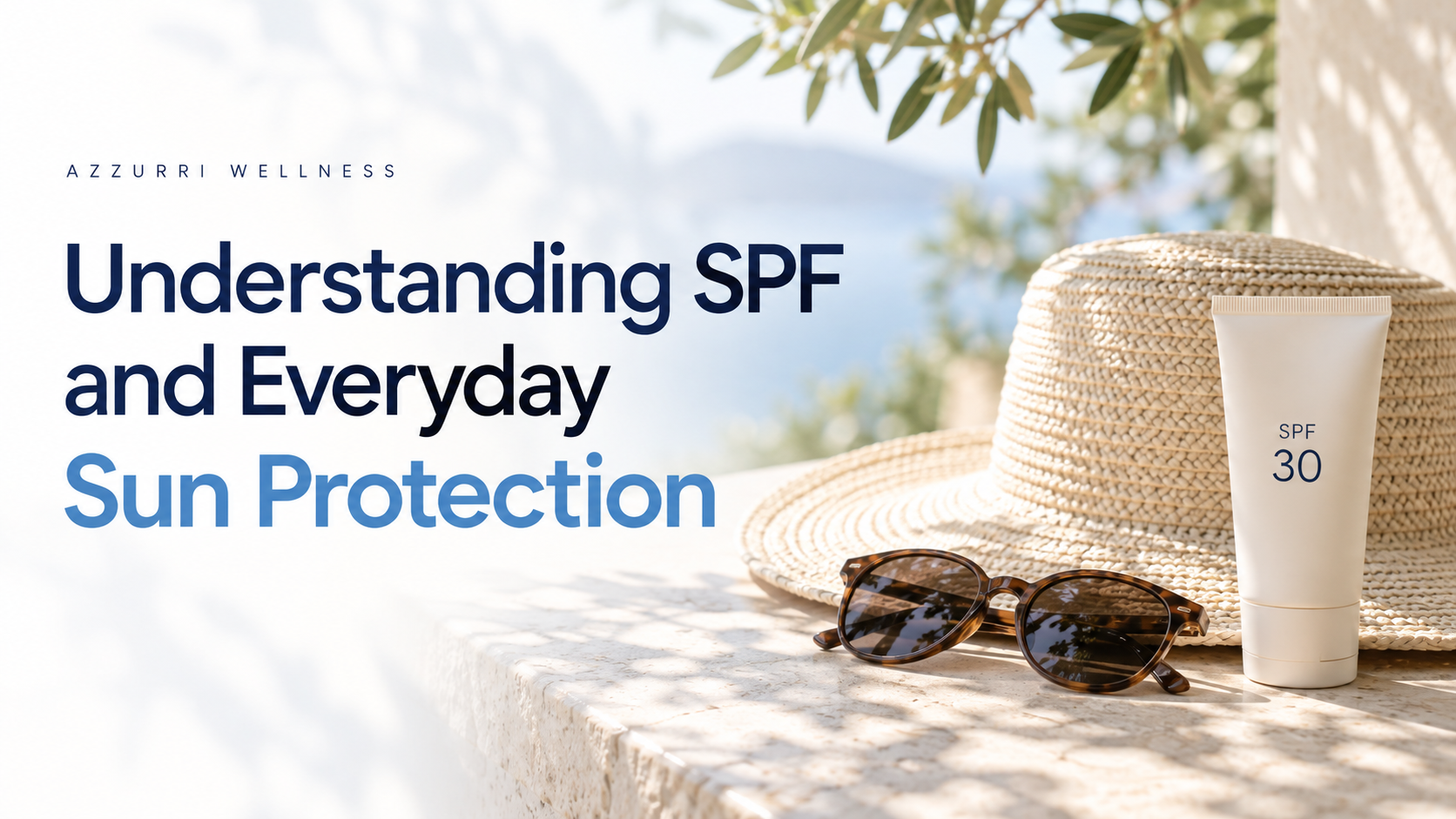
Everyday sun protection starts with understanding a few label terms and planning for the time you spend outside. SPF, broad spectrum, and water resistance describe different features. Reading them together helps you decide how to use sunscreen alongside shade and protective clothing.
A walk, an outdoor lunch, or a morning of gardening can call for different preparations. Start with the activity, check the conditions, and keep the supplies you need within reach.
What SPF actually measures
SPF stands for sun protection factor. It describes protection against sunburn under test conditions and mainly reflects protection against UVB radiation. It does not tell you how many hours you can spend outside. SPF 30, for example, does not mean 30 hours of protection. [1]
The amount applied, the intensity of sunlight, and what happens during the activity all affect real-world use. A higher SPF does not remove the need to follow the application and reapplication directions.
Look for broad spectrum on the label
Broad spectrum means a sunscreen provides protection against both UVA and UVB radiation. The American Academy of Dermatology recommends a broad-spectrum, water-resistant sunscreen with SPF 30 or higher. [2]
Check these features before comparing packaging or choosing a texture. A lotion, cream, or stick may suit different preferences, but the directions still matter. Select a format you can apply as instructed to all exposed areas.
Understand water resistance and reapplication
Water resistant does not mean waterproof. In the United States, water-resistant sunscreen labels specify 40 or 80 minutes of protection during swimming or sweating under the required testing conditions. Follow the directions for that product. [1]
Reapply approximately every two hours while outdoors and after swimming, sweating, or towel drying, as directed. Apply before going outside according to the label. Check easy-to-miss areas such as the ears, back of the neck, and tops of the feet when they are exposed. [1] [2]
Use the UV Index when planning outdoor time
Temperature alone does not tell you how strong UV exposure will be. UV rays can reach you on cloudy or cool days. The UV Index forecasts their strength, and the CDC recommends sun protection when the index is 3 or higher. [3]
Before a long outdoor activity, check the forecast and think about where shade will be available. A shaded route or covered seating area can make your plan easier to follow. Shade works alongside your other protective measures.
Include clothing and a hat
A hat with a brim all the way around covers more of the face, ears, and neck than a baseball cap. Clothing that covers exposed skin and sunglasses that block UVA and UVB also belong in a sun protection plan. [3]
For a practical starting point, keep a hat and sunglasses beside the bag you normally take outside. Pack sunscreen where you can reach it, and check its expiration date before a trip. Replace an expired product. [3]
Build the plan around the activity
For an outdoor lunch, consider a shaded table and protection for exposed skin. For swimming, check water-resistance directions before entering the water and plan for reapplication afterward. For gardening, set out suitable clothing before you begin.
These small preparations make the instructions easier to follow. Use the product label and current conditions to guide the plan for each outing.