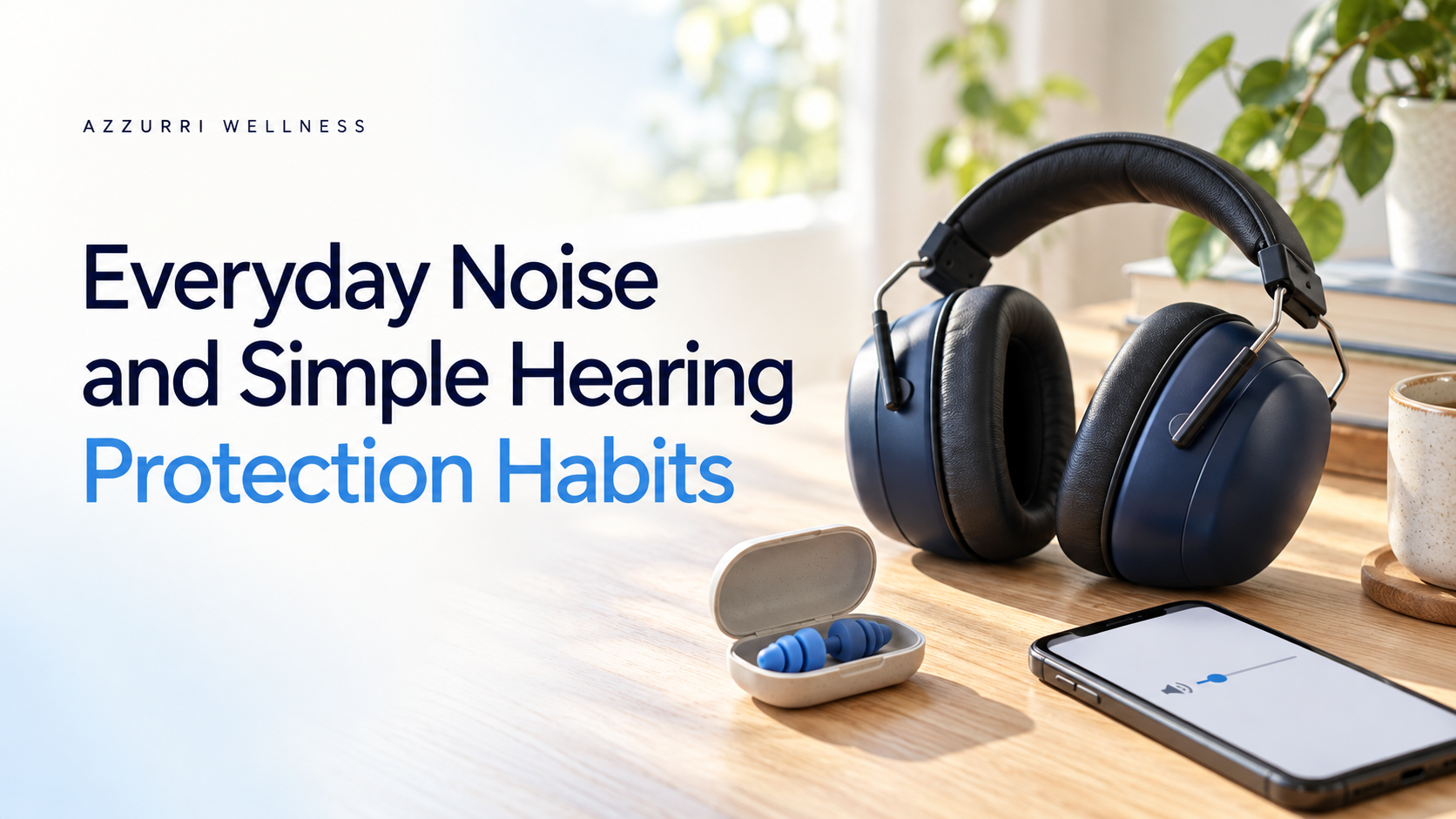
Everyday noise exposure can come from headphones, live music, power tools, or equipment used around the home. Useful hearing protection habits begin with noticing how loud a setting is, how long you remain there, and whether you can lower the volume or move away.
The National Institute on Deafness and Other Communication Disorders explains that both very intense sounds and repeated exposure to loud sounds can damage hearing. Planning ahead gives you more options before a noisy activity begins. [1]
Consider sound level and listening time together
Sound level is measured in decibels. NIDCD notes that long or repeated exposure at or above 85 A-weighted decibels, written as dBA, can cause hearing loss. As sound gets louder, the time needed for damage becomes shorter. [1]
Treat a noisy afternoon as a series of exposures. A concert, time near loud equipment, and headphones afterward can all contribute. A setting does not have to feel painful to deserve attention, and a brief quiet break does not erase earlier exposure.
Check headphone settings before pressing play
Start at a low volume and increase it only as needed. The World Health Organization recommends keeping volume down and using available listening-monitoring features to track exposure. Well-fitting noise-cancelling headphones may reduce the urge to raise the volume in a noisy setting. [2]
Review the volume-limit and sound-notification options on your own device. Features vary, so read their descriptions before relying on them. For a commute, set up the controls before leaving rather than adjusting them while crossing a road or moving through a busy area.
Create distance and choose quieter breaks
At a music event, choose a position away from loudspeakers where possible. During a noisy activity, use breaks to move to a quieter area. Reducing time near the sound source and increasing distance are practical ways to reduce exposure. [1] [2]
Decide where you could take a break before the event gets busy. If you are attending with friends, agree on a meeting place outside the loudest area. Keep walkways clear and follow venue instructions when moving between spaces.
Choose protection intended for noisy activities
Earplugs and protective earmuffs reduce the sound reaching your ears when worn correctly. They are useful for activities such as concerts, lawn mowing, and other loud tasks. Fit and consistent use matter. A device that is uncomfortable or repeatedly removed will not provide its intended protection. [3]
Follow the manufacturer’s fitting instructions. Protective earmuffs need to cover both ears and form a proper seal. Earplugs should fit comfortably without being forced. A hearing professional can help if you have difficulty selecting or fitting protection. [3]
Ordinary audio headphones should not be assumed to provide hearing protection for loud equipment. Choose equipment designed and rated for that purpose, and follow any workplace safety requirements. [4]
Make the equipment easy to find
Keep clean hearing protection with the items you use for the activity. A small case can go beside concert tickets or in a gardening kit. Check the condition and care instructions before use, and replace worn or damaged items as directed.
Start with one familiar situation this week. Review the volume settings on a device, choose a quieter position at an event, or check the fit of your hearing protection before using loud equipment. Keep the change specific enough to repeat.