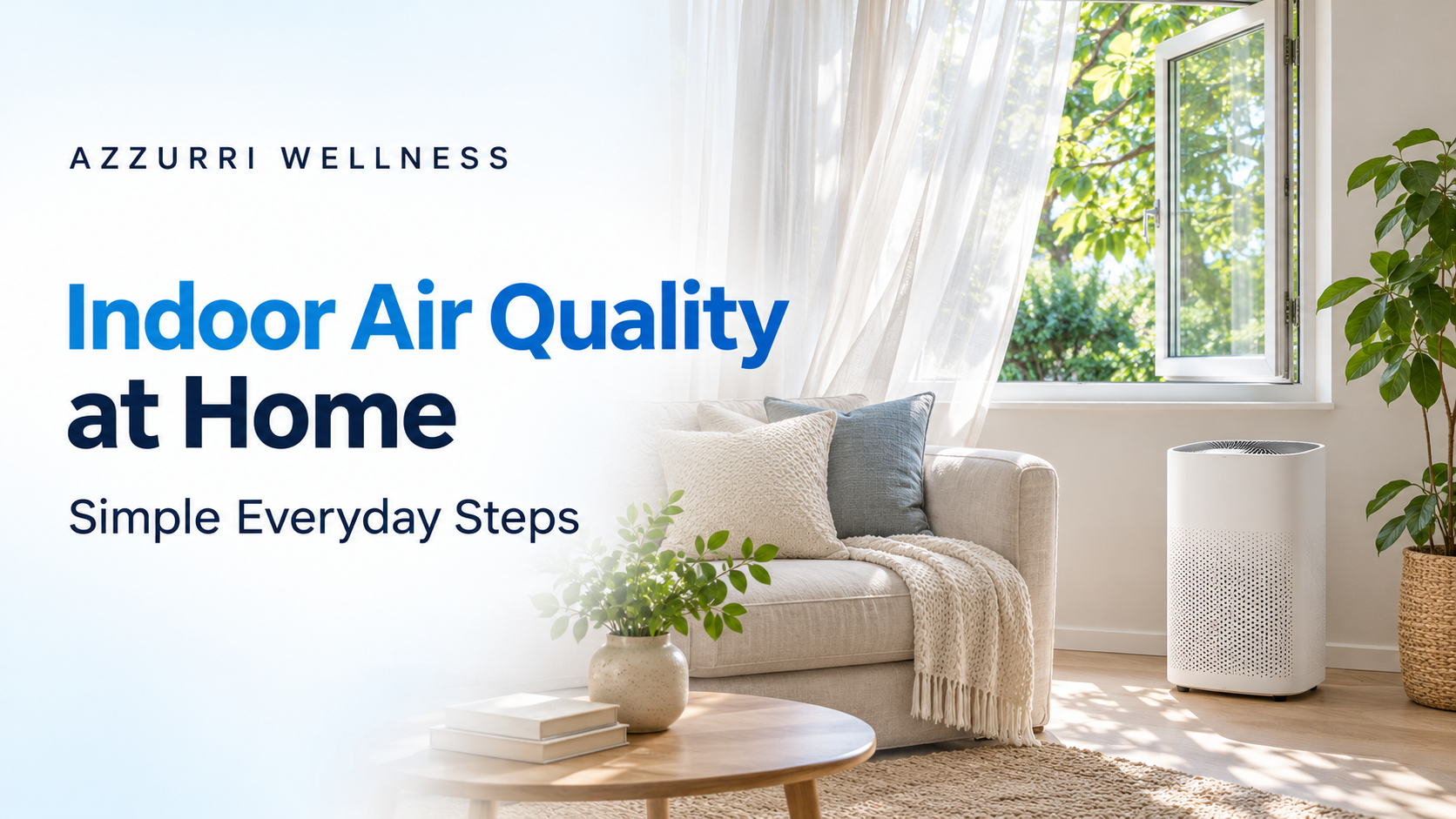
Cooking dinner, taking a shower, and using household products can all change the air inside a home. Indoor air quality at home depends on what enters the space, what happens inside it, and how air and moisture are managed.
A useful starting point is to look at familiar activities room by room. The U.S. Environmental Protection Agency identifies three approaches: reducing pollution sources, improving ventilation, and using air cleaning as a supplement. [1]
Start with the source
Before choosing equipment, consider what may be adding pollutants indoors. Cooking, smoke, and some cleaning or hobby products can contribute. Read product directions, including any ventilation requirements, and plan activities such as painting around those instructions. [4]
Make the review specific. Which fan serves the kitchen? Where are household products used? Is there a recurring damp area? Writing down these details gives you a practical list to work through instead of a vague goal to improve the whole house at once.
Use ventilation when conditions allow
Kitchen and bathroom fans that exhaust outdoors can remove pollutants or moisture near the activity producing them. Opening windows can also increase ventilation when outdoor air quality, weather, and safety allow. Outdoor smoke or other pollution changes that decision. [2]
Check how your home actually works. A fan that recirculates air is different from one that sends it outside. If you rent or do not know where an exhaust leads, ask the property manager or a qualified technician.
Pay attention to moisture
Persistent condensation, leaks, and damp surfaces deserve attention. EPA recommends keeping relative humidity below 60 percent, ideally between 30 and 50 percent where possible. A humidity meter can help you check conditions. [3]
Fix leaks promptly and dry wet areas. Renters should report plumbing leaks and moisture problems to building management. An air cleaner does not fix the water problem behind mold growth, so moisture control remains essential. [3]
Understand what filtration can do
A portable air cleaner typically serves one room or area. Match its clean air delivery rate, or CADR, to the space you plan to use it in. Keep airflow clear and follow the manufacturer's filter replacement instructions. [4]
No air cleaner removes every pollutant. Particle filters and filters designed for gases have different roles, and filtration supplements ventilation and source control. EPA also advises avoiding devices that intentionally produce ozone, a lung irritant. [4]
Make maintenance part of the routine
Keep the equipment manual and filter model information somewhere easy to find. Add a reminder based on the manufacturer's maintenance schedule, and note unresolved leaks or ventilation questions so they are not forgotten.
Choose one manageable starting point, such as checking the bathroom exhaust or locating the correct replacement filter. A clear task makes it easier to follow through and decide what needs attention next.