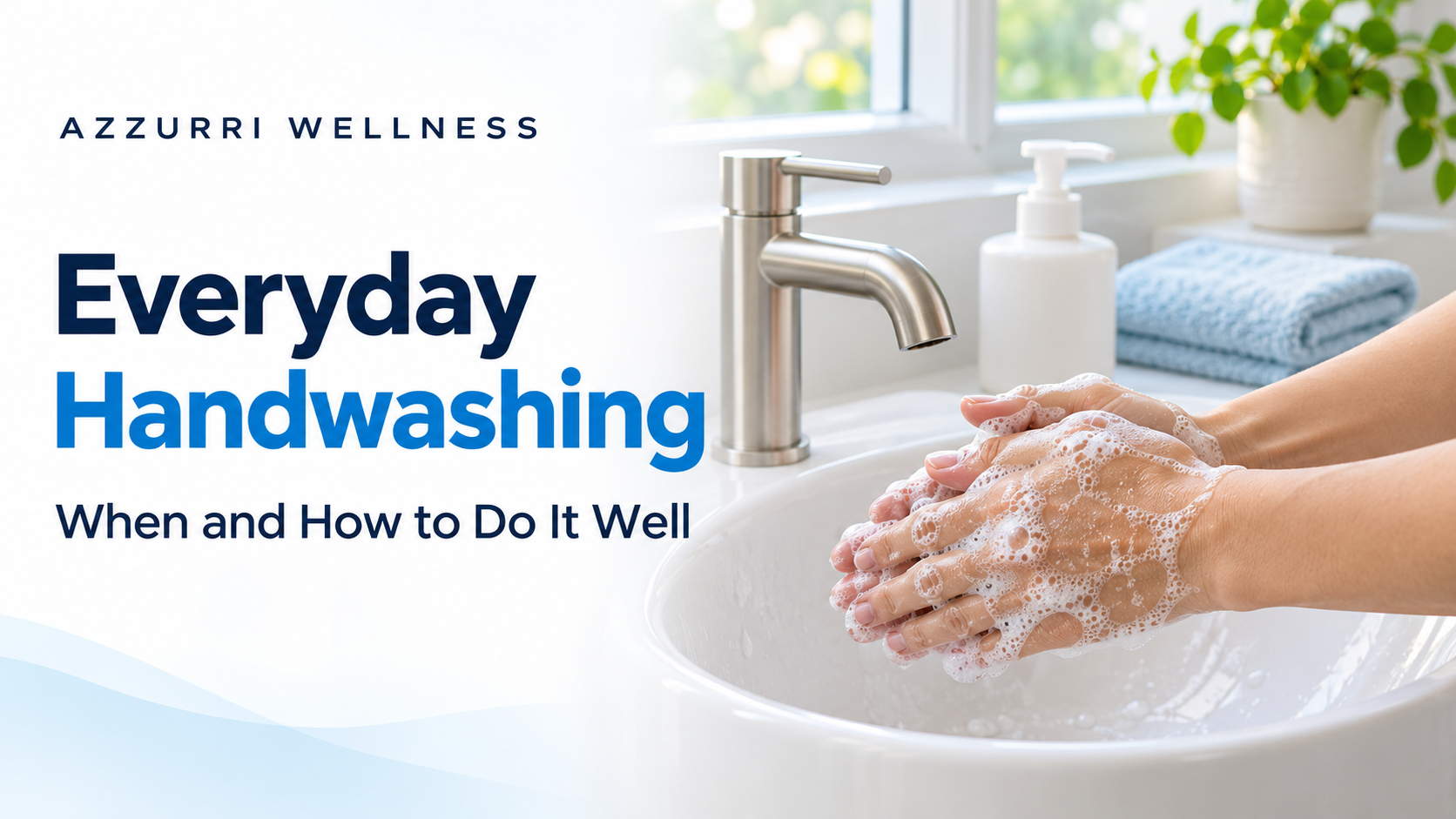
Everyday handwashing is easy to rush, especially while cooking, leaving the bathroom, or getting ready to eat. A reliable routine comes down to knowing when to wash, allowing enough time, and having the supplies within reach.
Use the guide below to review the routine at home or on the go. It focuses on ordinary daily situations, where a clear sequence is easier to remember than a long list of products.
Connect handwashing to key moments
The CDC recommends washing before, during, and after food preparation, before and after eating, and after using the toilet. Other important times include after coughing, sneezing, blowing your nose, handling garbage, or touching animals and their waste. [1]
Think about the transitions in your own day. Preparing lunch after feeding a pet is one example. Linking the wash to the next activity can provide a useful reminder without relying on a fixed hourly schedule.
Give each part of the wash enough attention
Start by wetting your hands under clean running water. Warm or cold water is suitable. Turn the tap off while applying soap and lathering, then scrub for at least 20 seconds. Include the backs of both hands, the spaces between fingers, and beneath the nails. Rinse thoroughly and finish with a clean towel or an air dryer. [1]
The 20 seconds refers to scrubbing, rather than the entire visit to the sink. A short timer can help you become familiar with the duration. Avoid letting a hurried rinse replace the lathering and scrubbing steps.
Keep the soap choice simple
Plain soap is suitable for routine handwashing. The FDA says there is insufficient evidence that over-the-counter antibacterial soaps prevent illness better than plain soap and water. An antibacterial label is therefore not a requirement for an everyday home routine. [2]
At home, keep the soap where people can reach it and check the dispenser before it runs empty. This is a small maintenance task, but it removes an avoidable interruption at the sink.
Know when hand sanitizer fits
If soap and water are unavailable, choose a hand sanitizer containing at least 60 percent alcohol. Check its label for the amount to use, cover every hand surface, and rub until dry. Do not wipe it off or rinse before it has dried. [3]
Sanitizer has limits. It does not remove every type of germ and may work less effectively on visibly dirty or greasy hands. After activities such as gardening, use soap and water when a handwashing station is available. Supervise young children using sanitizer to prevent swallowing. [3]
Finish with drying and a ready-to-use sink
Drying is part of the process. CDC guidance accepts either a clean towel or an air dryer and advises drying hands completely. Keep a suitable drying option available wherever you regularly wash. [4]
Before the next busy meal or trip out, check three basics: soap, access to clean running water, and a way to dry your hands. Having them ready makes the full routine easier to complete.