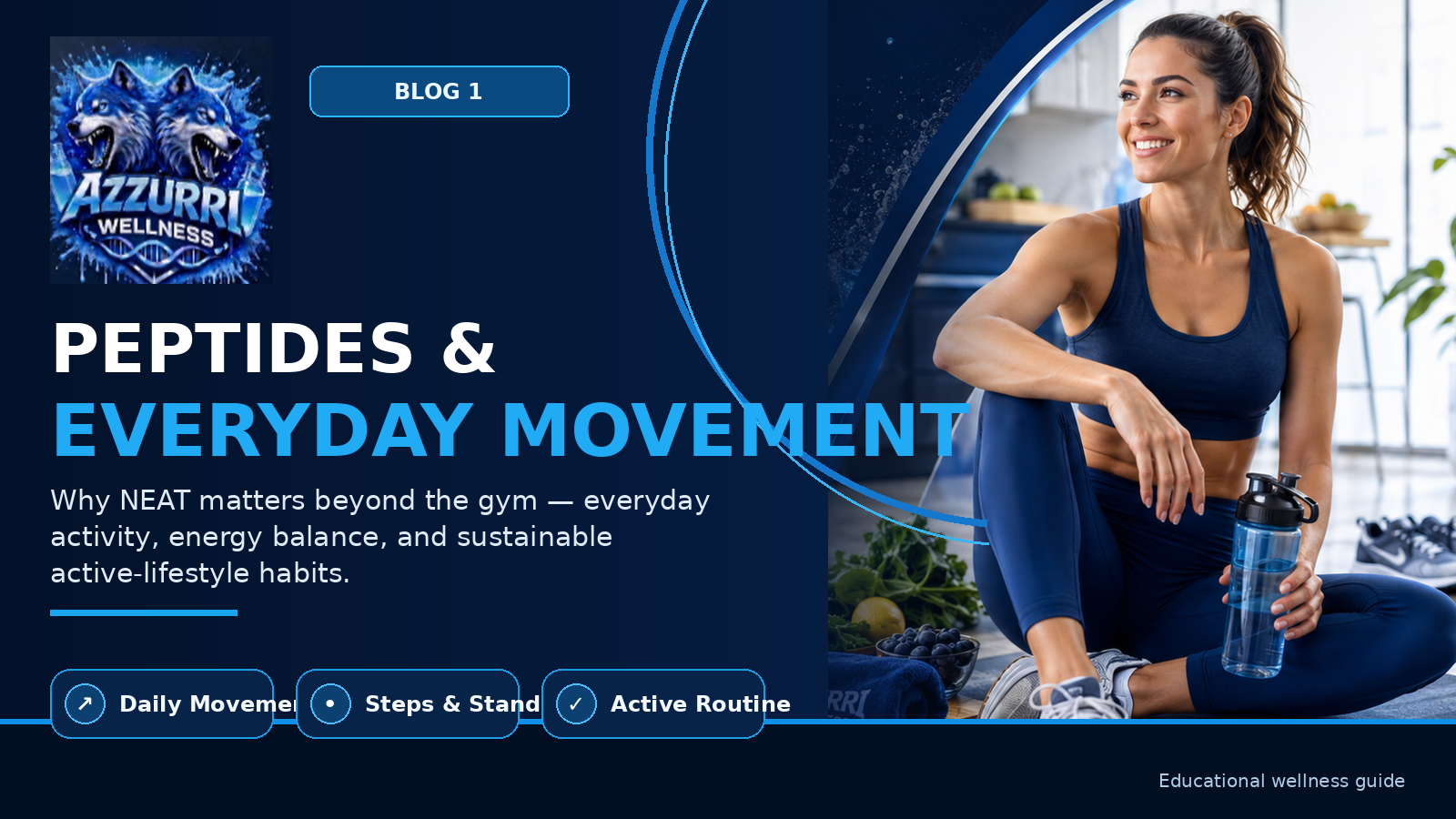
When people think about an active lifestyle, structured exercise usually gets most of the attention. Strength training, running, cycling, fitness classes, and other planned workouts are easy to recognize as physical activity. However, movement also happens throughout the rest of the day.
Walking around the office, taking the stairs, carrying groceries, completing household tasks, standing while working, gardening, shopping, or taking a short walk after a meal are all examples of everyday movement.
This broader category of movement is often discussed through the concept of non-exercise activity thermogenesis, commonly known as NEAT. For health-conscious individuals interested in active living, body composition, energy balance, and peptide science, understanding NEAT provides a useful reminder that wellness is influenced by the entire day—not only formal workouts.
What Is NEAT?
NEAT stands for non-exercise activity thermogenesis. It describes energy expenditure associated with everyday activity outside sleeping, eating, and sports-like exercise.
Examples can include walking to another room, standing, typing, doing household work, gardening, carrying shopping bags, moving around at work, or completing other normal daily tasks.
No single activity has to feel intense. Small amounts of movement can accumulate across the day and form part of an active lifestyle.
Why Everyday Movement Matters
A structured workout may occupy only one part of the day. The remaining hours provide many additional opportunities for movement.
Someone may complete a workout and then spend much of the remaining day sitting. Another person may naturally accumulate activity through an active occupation, walking, standing, household tasks, or transportation.
Everyday movement does not have to replace formal exercise. Instead, both can complement each other as part of a balanced routine.
NEAT and Daily Energy Use
The body uses energy continuously for many different processes. Energy is required for basic biological functions, digestion, physical activity, exercise, and ordinary movement.
Everyday activity can vary significantly between individuals depending on occupation, environment, transportation, habits, and schedule.
Looking at overall movement patterns can therefore provide a broader wellness perspective than focusing only on a single workout.
Where Peptide Science Fits In
Peptides are short chains of amino acids, and many naturally occurring peptides participate in biological signaling.
Different peptide families interact with different receptors and pathways. This is why peptide science covers a wide variety of research areas rather than representing one single wellness effect.
Peptide research should be considered separately from everyday movement. Learning about biological signaling can be one part of wellness education, while daily activity remains an important lifestyle consideration.
Simple Ways to Add More Movement
Adding everyday activity does not require turning every part of the day into a workout.
- Take short walking breaks during long periods of sitting.
- Use stairs when practical.
- Walk during casual phone calls.
- Stand and move between work tasks.
- Take a short walk after meals.
- Complete household or outdoor tasks that involve movement.
- Choose active hobbies you genuinely enjoy.
- Walk short practical distances when appropriate.
The most sustainable changes are often the ones that fit naturally into an existing lifestyle.
Movement Does Not Need to Be Extreme
An active lifestyle does not require maximum intensity every day.
Walking, recreational activity, mobility work, resistance training, cardiovascular activity, and normal daily movement can all play different roles within a balanced routine.
The intensity and amount of movement can vary according to personal circumstances, experience, schedule, and recovery needs.
Breaking Up Long Periods of Sitting
Modern work and entertainment can involve long periods of sitting. Creating natural reasons to move periodically can help add activity throughout the day.
Refilling a water bottle, walking to another room, standing between tasks, going outside briefly, or completing a household chore can all create opportunities for movement.
These habits can be simple enough to become part of normal daily life.
Everyday Movement and Structured Training
NEAT should not be treated as a substitute for structured exercise.
Instead, everyday movement can sit alongside planned physical activity. A person might complete several structured workouts each week while also walking, standing, and moving regularly during normal daily routines.
This approach creates an active lifestyle that is not dependent on one specific workout period.
Using Step and Activity Trackers Sensibly
Phones, watches, and activity trackers can provide estimates of steps and general movement.
These tools may help people notice patterns, but they do not need to become a source of pressure. There is no need to treat one number as the only measure of an active day.
For many people, noticing general trends in movement can be more useful than chasing perfection.
Nutrition, Hydration, and Recovery Still Matter
Movement is only one part of overall wellness.
Balanced nutrition, hydration, sufficient sleep, appropriate recovery, and realistic routines also contribute to a sustainable lifestyle.
Rather than isolating one habit, health-conscious living can be viewed as a collection of consistent choices that work together.
The Bigger Wellness Picture
Peptide science can be an interesting area for people exploring modern wellness research, but it should be viewed within a much wider lifestyle context.
Movement, nutrition, hydration, sleep, recovery, and consistency remain important everyday considerations.
Learning how these areas connect can provide a more balanced perspective than relying on any single product, routine, or wellness trend.
Final Thoughts
Some of the most practical movement in an active lifestyle happens outside formal exercise.
Walking, standing, taking stairs, completing daily tasks, and spending less time completely inactive can all contribute to a more movement-focused day.
For people interested in peptide science and modern wellness, understanding NEAT provides a useful reminder that healthy routines are built throughout the entire day.
References
- Levine JA. Nonexercise activity thermogenesis (NEAT): environment and biology. American Journal of Physiology-Endocrinology and Metabolism. 2004;286(5):E675-E685. doi:10.1152/ajpendo.00562.2003.
- World Health Organization. WHO Guidelines on Physical Activity and Sedentary Behaviour. Geneva: World Health Organization; 2020.
- Bull FC, Al-Ansari SS, Biddle S, et al. World Health Organization 2020 guidelines on physical activity and sedentary behaviour. British Journal of Sports Medicine. 2020;54:1451-1462.
Educational information only. This content is not medical advice and is not intended to diagnose, treat, cure, or prevent any medical condition. Individual wellness decisions should be discussed with an appropriately qualified professional when needed.