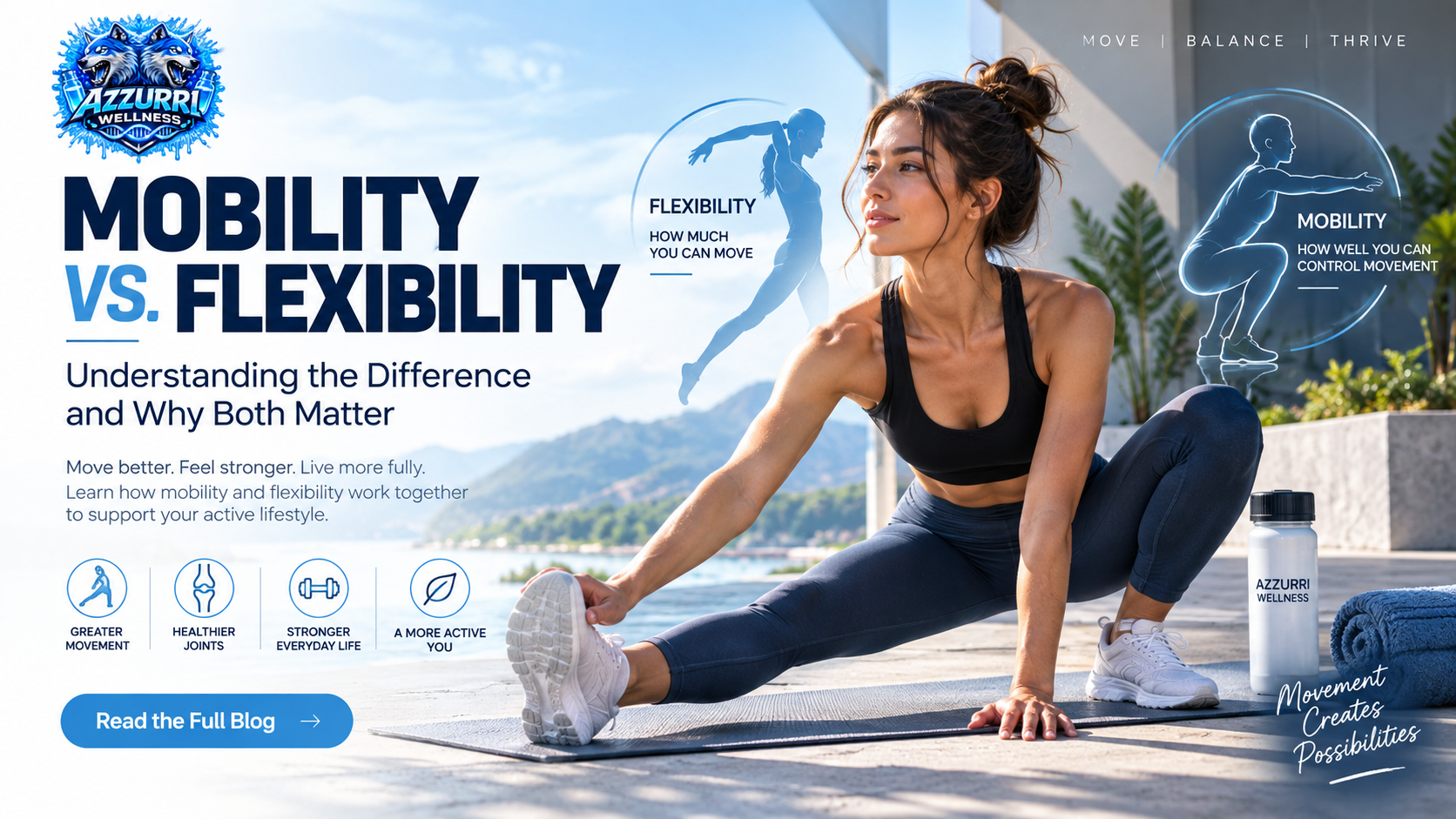
Mobility vs. Flexibility: Understanding the Difference and Why Both Matter
Mobility and flexibility are often used as if they mean the same thing, but they describe different aspects of movement. Flexibility generally refers to how much a muscle and surrounding tissues can lengthen, while mobility involves how freely a joint can move through its available range of motion with control.
Understanding the difference between mobility vs flexibility can help you build a more balanced movement routine. You do not necessarily need a long stretching session every day. Instead, a combination of regular movement, appropriate stretching, strength work, and activities that challenge your range of motion can become part of a sustainable active lifestyle.
What Is Flexibility?
Flexibility is commonly associated with the ability of a joint or muscle group to move through a range of motion.
For example, being able to comfortably reach toward your toes, move your arms overhead, or extend your hips involves different aspects of flexibility.
Flexibility can vary considerably between people. Age, activity levels, previous training, anatomy, and regular movement habits can all influence how flexible someone feels.
The goal does not need to be achieving extreme flexibility. For everyday wellness, the more useful question may be whether you can move comfortably through the ranges of motion that your activities require.
The National Institute on Aging notes that stretching can help maintain and improve flexibility and recommends stretching when muscles are warmed up and avoiding stretches that cause pain.
What Is Mobility?
Mobility is broader than flexibility. It involves the ability to move a joint through its available range while maintaining control.
Think about a simple overhead reach. Having enough flexibility in the shoulders is one part of the movement. Being able to actively control your arms through that range while maintaining a comfortable position involves mobility.
Mobility therefore combines elements such as:
- Joint movement
- Flexibility
- Strength
- Coordination
- Balance
- Motor control
This is why someone can be relatively flexible but still have difficulty controlling certain movements.
Mobility vs. Flexibility: What's the Difference?
A simple way to think about it is:
Flexibility = how much you can move.
Mobility = how well you can actively control that movement.
Both can be useful. A person who spends much of the day sitting may benefit from incorporating more regular movement into their routine. Someone who participates in resistance training, recreational sports, dancing, or other physical activities may also want to include mobility work that complements those activities.
The goal is not to become extremely flexible. It is to develop movement that is comfortable, controlled, and appropriate for your lifestyle.
Why Everyday Mobility Matters
Mobility is not only relevant to people who exercise. Everyday activities involve movement through different ranges of motion.
Think about:
- Getting out of a chair
- Reaching for something on a shelf
- Turning to look behind you
- Walking upstairs
- Getting down to the floor
- Reaching into a cupboard
- Carrying groceries
- Getting dressed
Maintaining the ability to perform these movements comfortably can make everyday activities feel more manageable.
Sitting Less and Moving More
Modern routines often involve long periods of sitting. Work, commuting, studying, gaming, and screen-based entertainment can all contribute to extended periods in one position.
Current U.S. physical activity guidance emphasizes moving more and sitting less, while recommending that adults gradually build toward regular aerobic and muscle-strengthening activity.
This does not mean you need to turn every break into a workout. Small changes can help break up long periods of inactivity:
- Stand between tasks
- Walk while taking a phone call
- Stretch after sitting for a long period
- Take the stairs when practical
- Walk during a lunch break
- Change your working position regularly
Simple Mobility Ideas
A mobility routine does not need to be complicated. Depending on your needs and experience, it might include controlled movements such as:
- Shoulder circles
- Gentle hip rotations
- Ankle movements
- Controlled bodyweight squats
- Walking lunges
- Torso rotations
- Dynamic leg movements
The purpose is to move comfortably through a useful range rather than forcing a joint into an extreme position.
Mobility Before and After Exercise
Mobility can also be incorporated around workouts. Before exercise, many people prefer dynamic movements that gradually prepare the body for the activity ahead.
After training, some people may choose gentle stretching as part of their cool-down routine. The appropriate approach depends on the activity and individual needs.
For people who are new to exercise, gradually increasing activity is generally more practical than immediately adopting a demanding routine.
Strength and Mobility Work Together
Mobility should not be viewed separately from strength. Having control over a movement often requires sufficient strength to actively use a particular range.
For example, moving into a deeper squat involves more than simply having flexible hips or ankles. You also need the strength and coordination to control the position.
This is one reason a balanced movement routine can include both resistance training and mobility-focused exercises.
You Don't Need a Perfect Routine
There is no requirement to spend an hour stretching every day. For many people, a few minutes of movement spread throughout the day can be easier to maintain than a complicated program.
You could start with:
- Morning: A few gentle mobility movements.
- During work: Regular position changes and short walking breaks.
- Before training: Movement relevant to your planned workout.
- After training: Gentle stretching or relaxed movement.
The most useful routine is one that fits your schedule.
Listen to Your Body
Mobility work should feel controlled and comfortable. Stretching or movement should not be treated as a competition to see how far you can push a joint.
If a particular movement causes pain, stop and consider seeking appropriate professional guidance, particularly if you have an existing injury or health concern.
Final Thoughts
Understanding mobility vs flexibility can make it easier to build a balanced movement routine.
Flexibility is one part of movement, while mobility adds the ability to actively control movement through a range.
You do not need extreme flexibility or an elaborate routine. Regular movement, appropriate stretching, strength training, and activities that suit your lifestyle can all contribute to a well-rounded approach.
Move regularly. Build control. Stay consistent.