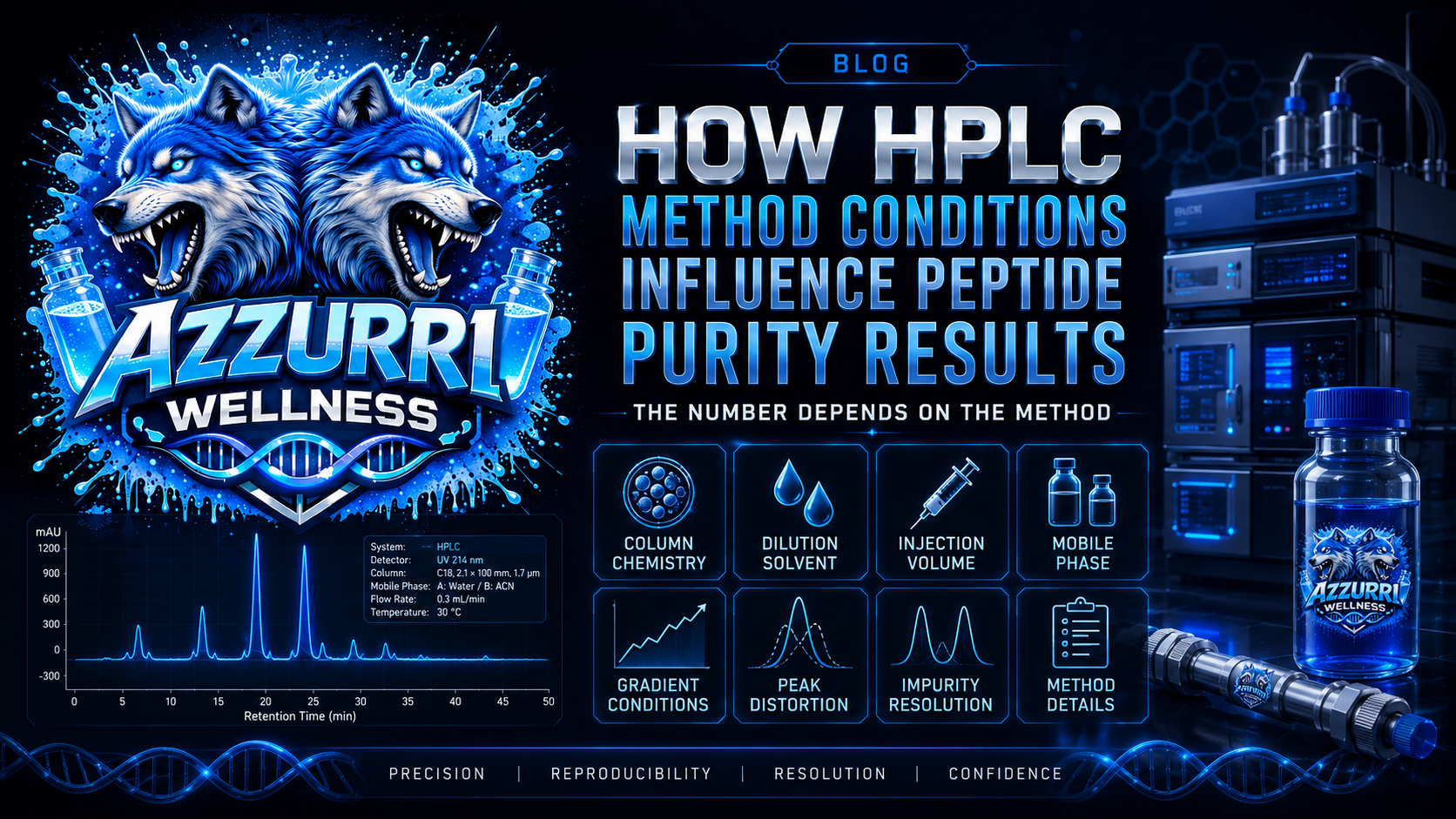
A peptide HPLC report may display one clear percentage, but that number is not produced independently of the analytical method. The column, sample solvent, injection volume, mobile phase, and gradient can all influence how the main peptide peak appears and how effectively related components are separated. The same sample can produce different chromatographic profiles under different method conditions. Column chemistry The column contains the stationary phase responsible for separating sample components. Different column materials interact differently with peptides according to properties such as: Charge Hydrophobicity Molecular size Amino-acid sequence Counterion form A method that separates one peptide effectively may provide limited resolution for another. Column type, dimensions, particle size, and temperature should therefore be included when reporting results. Dilution solvent The liquid used to prepare a peptide sample can affect both solubility and chromatography. When the sample solvent differs greatly from the starting mobile phase, the injected sample may spread or distort before proper separation begins. This can produce: Broad peaks Fronting or tailing Split peaks Reduced impurity resolution Inconsistent peak-area calculations A 2022 study by Molineau and colleagues found that matching the dilution solvent closely to the chromatographic co-solvent produced improved peak shape for the peptide samples evaluated. However, some samples required additional water for complete dissolution, demonstrating that solubility and chromatographic performance must sometimes be balanced. Injection volume Injecting more sample does not automatically create a better result. An excessive injection volume may overload the column or introduce too much sample solvent, causing peak distortion and reduced separation. A very small injection may provide insufficient signal or inconsistent sample delivery. In the Molineau study, a 1 µL injection produced the most suitable peak shapes under the specific method tested. Both larger and smaller volumes resulted in greater distortion. This value applies to that study’s equipment, column, and conditions—not as a universal rule for every peptide method. Mobile phase and gradient conditions The mobile phase carries the sample through the column. Its composition affects peptide retention and separation. Important variables include: Organic-solvent percentage Water content Acid or buffer selection Additives pH Flow rate The gradient controls how quickly the mobile-phase composition changes during analysis. A steep gradient may shorten the run but compress several components into a narrow period, reducing separation. A shallower gradient may improve resolution but increase analysis time. Peak shape and impurity resolution A distorted peak makes accurate interpretation more difficult. An impurity may: Appear as a shoulder beside the main peak Overlap with the main peak Become hidden within a broad peak Be incorrectly included in the main peak’s area Because chromatographic purity is commonly calculated from integrated peak areas, poor separation can influence the reported percentage. A large main peak does not necessarily prove that every related component has been resolved. Why method details should accompany the result A useful peptide HPLC report should identify key conditions such as: Column type and dimensions Mobile-phase composition Gradient program Flow rate Detection wavelength Sample solvent Injection volume Column temperature Peak-integration approach Without these details, two percentages from different laboratories may look comparable even though they were produced under substantially different conditions. Azzurri Wellness perspective An HPLC purity percentage should be interpreted as the result of a specific sample analyzed using a specific method. The number becomes more meaningful when accompanied by: A readable chromatogram Clear method conditions Adequate impurity resolution Batch identification Supporting identity information The result matters—but so does the method behind it.
Reference Molineau J, Hideux M, Hennig P, et al. Effect of dilution solvent and injection volume on the analysis of basic hydrophilic therapeutic polypeptide salts with pressurized carbon dioxide mobile phases. Journal of Chromatography B. 2022;1212:123519. DOI: 10.1016/j.jchromb.2022.123519. Research note: The cited study used enhanced-fluidity chromatography with pressurized carbon dioxide rather than conventional reversed-phase HPLC. Its findings provide a useful example of how sample preparation and injection conditions influence peptide chromatography, but its exact settings should not automatically be transferred to other methods. Educational disclaimer: This article is provided for general scientific and laboratory-information purposes. Analytical conclusions should be based on documented procedures, suitable reference materials, and appropriately validated methods.